
Cuba Travel Guide 2026 — Everything You Need to Know
Cuba is one of the most captivating destinations in the Caribbean — and one of the most unique places on Earth. From the crumbling colonial grandeur of Havana to the lush tobacco valleys of Viñales, the cobblestone streets of Trinidad to the white sands of Varadero, Cuba offers an experience unlike anything else in Latin America. This comprehensive 2026 guide covers everything UK travellers need to know before booking a Cuba holiday — including flights, visas, the best time to visit, top destinations, and what to expect on the ground.
Travelfab has been arranging tailor-made holidays to Cuba for years, and our team has first-hand knowledge of every destination in this guide. We are ATOL protected (licence 11369) and work directly with local partners across the island to create unforgettable experiences.
How to Get to Cuba from the UK
There are no direct flights from the UK to Cuba. All routes require at least one connection. Typical journey times range from 12 to 16 hours depending on the stopover city. Here are the main options for UK travellers in 2026:
Major Indirect Routes
Iberia via Madrid — One of the most popular routes. London Heathrow to Madrid Barajas, then onward to Havana José Martí Airport. Total journey time around 14 hours with a comfortable connection in Madrid.
KLM via Amsterdam — Fly from London, Manchester, or other UK airports to Amsterdam Schiphol, then direct to Havana. Total journey time approximately 15 hours.
Air France via Paris — London to Paris Charles de Gaulle, connecting to Havana. Similar journey time to the Amsterdam route, around 14–15 hours.
Air Canada via Toronto — A westbound option via Canada. Longer overall at 16+ hours, but competitive fares. Regular service from London Heathrow.
British Airways via Miami or Nassau — Connect through the US (ESTA required) or the Bahamas. Journey times of 14–16 hours depending on the layover.
For a detailed breakdown of airlines, routes, and booking tips, see our Flights to Cuba page.
Visa & Entry Requirements for UK Travellers
Since July 2025, Cuba has operated an electronic visa (e-visa) system, replacing the old paper tourist card. UK citizens need:
Cuba e-visa (tourist card) — Apply online before departure. Single entry, valid for 90 days. Processing takes approximately 72 hours. Cost: around £22 via the official portal.
D'Viajeros online arrival form — A mandatory customs and health declaration form that must be completed within 72 hours of arrival. Generates a QR code to present at immigration.
Valid passport — Must be valid for at least 6 months from your arrival date in Cuba, with at least one blank page.
Travel insurance — Cuba requires all visitors to carry travel insurance with a minimum of $10,000 medical coverage. Proof may be checked at immigration. Travelfab partners with Affirma to provide comprehensive cover.
For the full step-by-step application process and common mistakes to avoid, visit our sister site cubavisa.uk — your complete guide to Cuba visas for UK travellers.
Best Time to Visit Cuba
The best time to visit Cuba is November to April, during the dry season, when temperatures average 25–28°C with minimal rainfall and low humidity. This is peak tourist season, so book early for the best availability.
Season Overview
Dry season (November–April) — The most popular time to visit. Warm, sunny weather with temperatures between 24–29°C. Ideal for touring, beach holidays, and outdoor activities. December to March is peak season with higher prices.
Shoulder months (May and November) — Excellent value. The weather is still pleasant, with occasional afternoon showers. Fewer crowds and lower prices make these months a smart choice.
Wet season (June–October) — Hot and humid (30–33°C) with regular afternoon downpours, though mornings are usually clear. Hurricane season runs June to November, with September and October carrying the highest risk. However, direct hits on Cuba are statistically rare.
Festival Calendar
Cuba hosts world-class festivals throughout the year. The Havana International Jazz Festival (January) and the Festival del Habano (February) are highlights during the dry season. Carnaval de Santiago (July) is a spectacular celebration of Afro-Cuban culture, music, and dance — the largest carnival in the Caribbean.
Where to Go in Cuba
Cuba is far more than Havana and the beach. The island is roughly the size of England and offers extraordinary diversity — from vibrant cities and colonial towns to dramatic valleys, mountain rainforest, and pristine coastline.
Havana
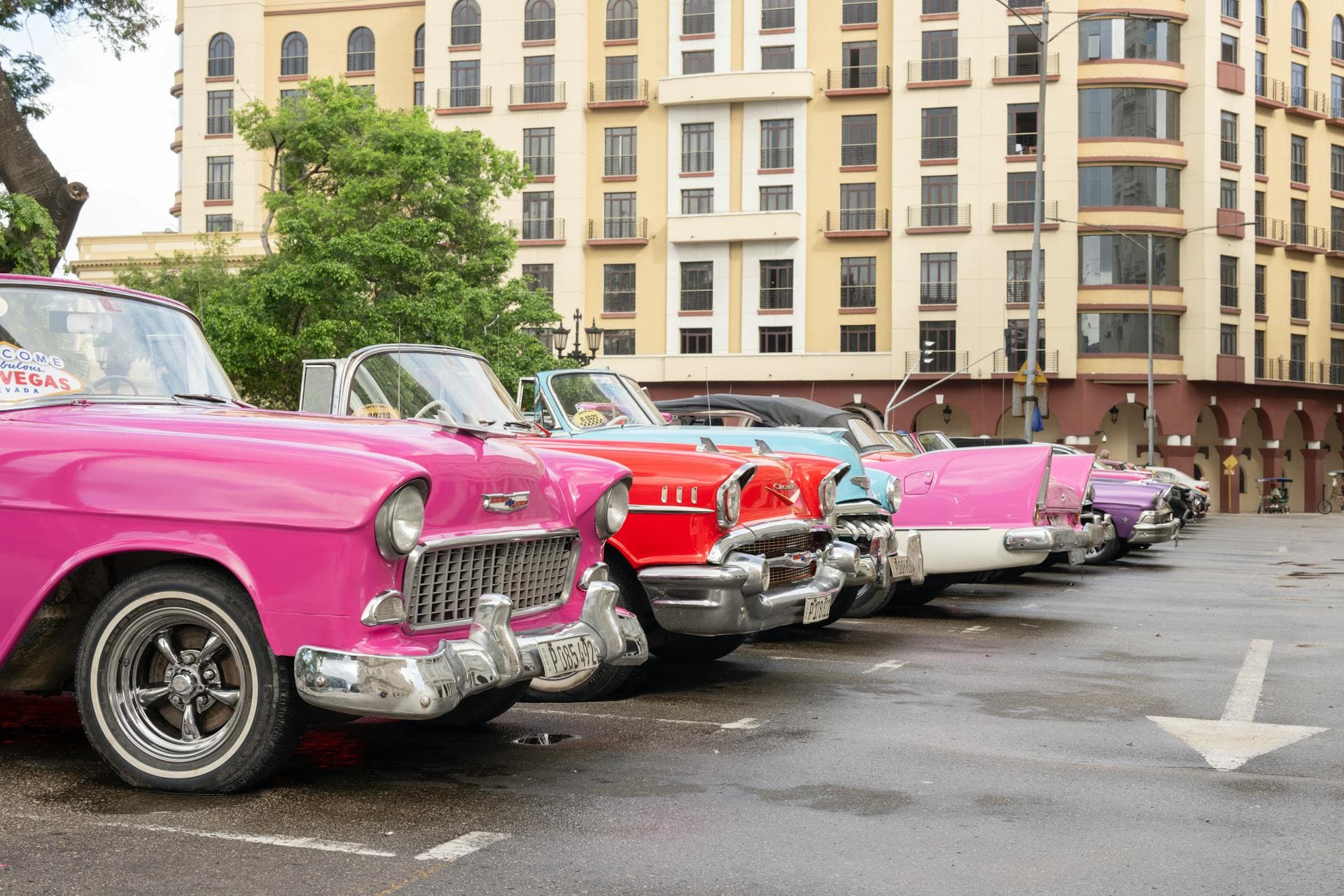
Cuba's capital is electrifying. Wander the UNESCO-listed streets of Old Havana (Habana Vieja), take a ride in a classic American car along the Malecón, explore the art district of Fusterlandia, and discover the city's legendary music scene in intimate jazz clubs and open-air plazas. Allow at least 2–3 days to scratch the surface.
Viñales
The Viñales Valley is a UNESCO World Heritage Site in western Cuba, famous for its dramatic limestone mogotes (flat-topped hills), tobacco plantations, and relaxed rural atmosphere. Go horseback riding through the fields, visit a tobacco farm to see cigars being hand-rolled, or explore underground cave systems. A perfect contrast to the energy of Havana.
Trinidad
Arguably Cuba's most beautiful town, Trinidad is a perfectly preserved colonial gem frozen in the 19th century. Pastel-coloured houses, cobblestone streets, and live music drifting from every corner. Nearby attractions include the Valle de los Ingenios (Sugar Mill Valley), the Topes de Collantes nature reserve, and Playa Ancón — one of Cuba's best south-coast beaches.
Cienfuegos
Known as the "Pearl of the South", Cienfuegos has a distinctly French-influenced colonial architecture that sets it apart from other Cuban cities. The elegant Prado boulevard, Jagua Castle, and Palacio de Valle are highlights. It is a natural stopover between Havana and Trinidad.
Santiago de Cuba
Cuba's second city is the birthplace of son music, the precursor to salsa. Santiago has a completely different character to Havana — more Afro-Caribbean, more musical, more intense. Visit the Castillo del Morro fortress, the Basilica of El Cobre, and time your visit for the July Carnival if you can.
Baracoa
Cuba's most remote city, tucked into the far eastern tip of the island and surrounded by lush rainforest, rivers, and mountains. Baracoa is the oldest Spanish settlement in Cuba (founded 1511) and feels wonderfully isolated. Famous for its chocolate, coconut cuisine, and the flat-topped mountain El Yunque. Getting here requires a scenic drive over the La Farola mountain road.
Varadero & the Beach Cays
For pure beach relaxation, Cuba delivers. Varadero's 20km stretch of white sand on the north coast is the island's most famous beach resort area, with all-inclusive hotels. The offshore cays — Cayo Largo del Sur, Cayo Coco, and Cayo Santa María — offer pristine, uncrowded Caribbean beaches ideal for a post-touring wind-down.
Explore all our Cuba destinations on our Cuba destination page.
What to Expect in Cuba
Cuba is a truly unique travel destination, and a few things work differently to what you may be used to. Here's what to know before you go:
Currency & Money
Cuba unified its dual currency system in 2021, so there is now one currency: the Cuban Peso (CUP). International visitors typically exchange euros, pounds, or US dollars at official exchange points (CADECAs) or hotels. Credit and debit cards issued by US banks do not work in Cuba, but UK-issued Visa and Mastercard cards are generally accepted at larger hotels and restaurants — though you should not rely on them. Bring cash (euros or pounds are best) as your primary means of payment, especially outside Havana.
Internet & Connectivity
Internet access in Cuba has improved but remains limited. Most hotels and public squares offer Wi-Fi via ETECSA hotspot cards (available at ETECSA offices and some hotels). Connection speeds are slow by Western standards. Mobile data via eSIM is available from providers like Holafly, though coverage can be patchy outside major cities. Consider this a chance to disconnect — it is part of the Cuban experience.
Accommodation
Cuba offers two main types of accommodation: state-run hotels (often large resorts managed by Meliá, Iberostar, or Cuban chains) and casas particulares (privately owned guesthouses). Casas particulares are the authentic Cuban experience — you stay with local families, eat home-cooked meals, and get insider recommendations. Standards vary, but the best casas are comfortable, clean, and wonderfully welcoming. Travelfab carefully selects casas and hotels for quality across all our itineraries.
Safety
Cuba is one of the safest countries in Latin America for tourists. Violent crime against visitors is extremely rare. Petty theft (pickpocketing, bag-snatching) can occur in busy tourist areas — standard precautions apply. The most common "scam" is locals offering unsolicited help or restaurant recommendations for a commission. The FCDO currently rates Cuba as generally safe for UK tourists. For the latest advice, check gov.uk/foreign-travel-advice/cuba.
Food & Drink
Cuban cuisine has improved dramatically in recent years, thanks to the growth of paladares (privately owned restaurants). Must-try dishes include ropa vieja (shredded beef), congris (rice and black beans), tostones (fried plantain), and fresh seafood. Cuba's cocktail culture is legendary — try a mojito at La Bodeguita del Medio, a daiquirí at El Floridita, or a Cuba libre at sunset on the Malecón. Vegetarian and vegan options are available but more limited outside Havana.
Health & Vaccinations
No vaccinations are legally required for entry to Cuba from the UK, but the NHS recommends being up to date with routine vaccinations and considering hepatitis A and typhoid jabs. Mosquito repellent is essential — dengue fever occurs in Cuba (there is no vaccine). Tap water is not safe to drink; bottled water is widely available. Cuba has a good healthcare system, but facilities outside major cities may be basic. Travel insurance with medical cover is mandatory (see visa requirements above).
Cuban Culture & Etiquette
Music is the heartbeat of Cuba. Son, salsa, rumba, cha-cha-chá — you'll hear live music everywhere, from street corners to restaurant patios. Cuba has produced more musical genres per capita than almost any country on Earth. Don't be shy about joining in.
Cubans are famously warm and hospitable. A few etiquette tips: always ask before photographing people (especially musicians — they may expect a small tip). Tipping is customary in restaurants (10%) and for drivers and guides. Learning a few words of Spanish goes a long way — English is not widely spoken outside tourist areas.
What to Pack for Cuba
Lightweight, breathable clothing (cotton or linen) — Cuba is hot year-round
Strong sunscreen (SPF 50+) and a wide-brimmed hat
Mosquito repellent with DEET
Cash in euros or pounds (ATMs are unreliable, US dollars incur a 10% surcharge)
Universal power adapter (Cuba uses a mix of US and European sockets)
Basic medication and first-aid supplies (pharmacies may have limited stock)
A good book — Wi-Fi is limited and this is a chance to unplug
A reusable water bottle with filter
Do not bring: drones (prohibited), GPS devices (can be confiscated), or excessive amounts of literature (may be questioned at customs).
Why Book Cuba with Travelfab
Travelfab is a UK-registered tour operator specialising in Latin America. When you book with us, you get:
ATOL protection (licence 11369) — Your money is fully protected for flight-inclusive holidays under the CAA scheme.
Tailor-made itineraries — Every Cuba holiday is built around your interests, pace, and budget. We do not sell off-the-shelf packages.
Local expertise — Our team has visited every destination in this guide. We work with trusted local partners across Cuba.
Affirma insurance — Hotel-only bookings are insured for your deposit and balance under The Package Travel Regulations.
Group adventure options — If you prefer travelling with others, our small-group Cuba adventures are available too.
Whether you're dreaming of classic cars in Havana, tobacco fields in Viñales, or salsa in Santiago, we'll make it happen. Get in touch to start planning your Cuba holiday.