DESTINATION GUIDES
Ecuador Travel Guide 2026: Andes, Amazon & the Galapagos
Complete Ecuador travel guide for UK visitors. Galapagos, Quito, Cotopaxi, Amazon rainforest, Cuenca and more. Visas, safety and best time to visit.

Ecuador may be one of South America's smallest countries, but it packs more diversity per square kilometre than almost anywhere on Earth. Within a few hours you can travel from the snow-capped volcanoes of the Andes to the steaming Amazon basin, from the colonial splendour of Quito to the otherworldly wildlife of the Galapagos Islands.
This guide covers everything UK travellers need to know about visiting Ecuador in 2026, from the headline experiences to the practical details that make a trip run smoothly.
The Galapagos Islands
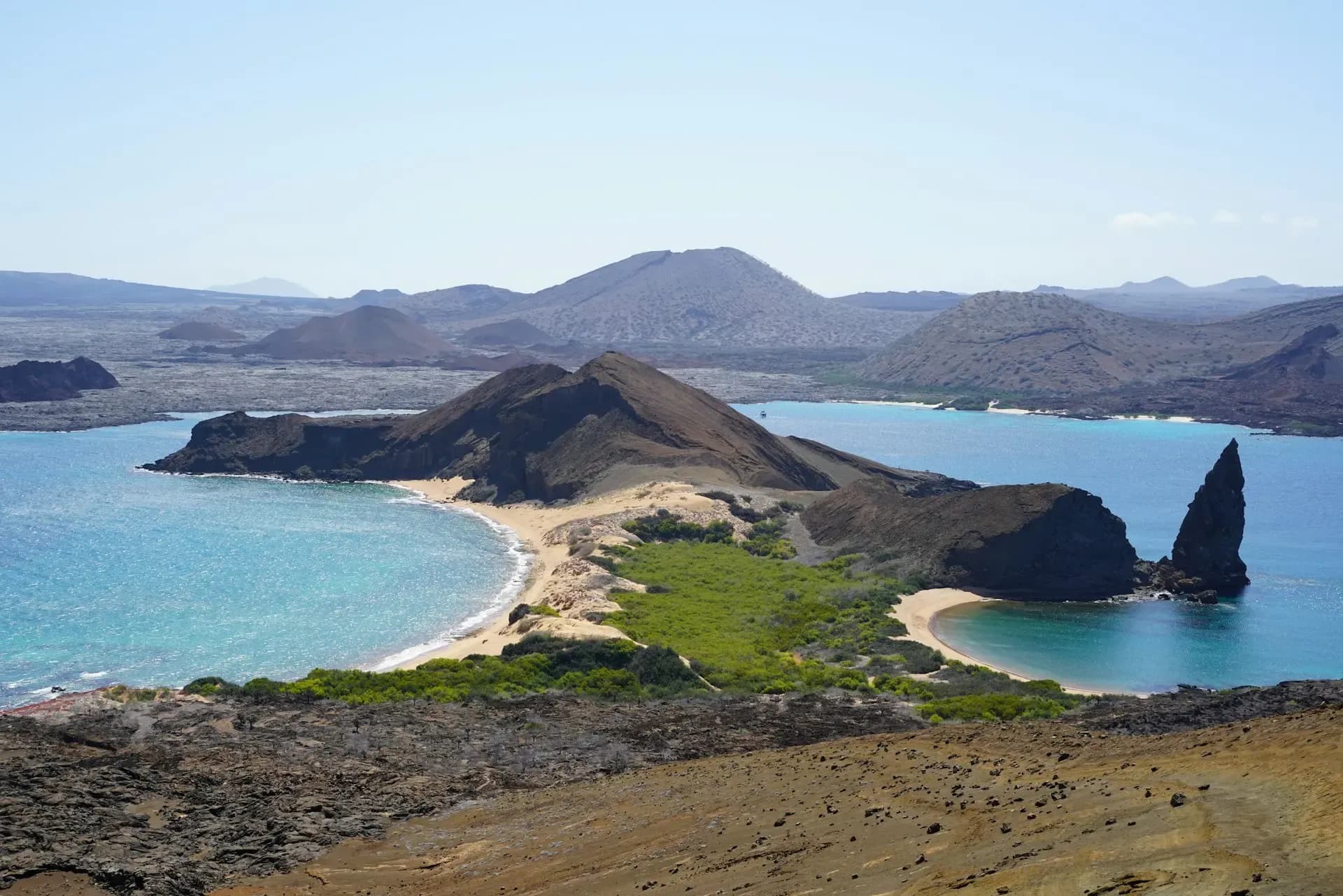
The Galapagos Islands are the undisputed highlight of any Ecuador trip. This volcanic archipelago, 1,000 kilometres off the coast, is home to wildlife found nowhere else on Earth, and the animals have no fear of humans.
What to Expect
Giant tortoises, The iconic Galapagos residents, weighing up to 250 kilograms. See them in the wild on Santa Cruz and Isabela islands.
Blue-footed boobies, Watch their famous courtship dance on North Seymour and Espanola islands
Marine iguanas, The world's only sea-going lizards, found basking on volcanic rocks
Sea lions, Playful and curious, they will swim alongside you while snorkelling
Snorkelling with sharks, Hammerhead sharks, reef sharks and whale sharks (seasonal) in crystal-clear waters
How to Visit
There are two main ways to experience the Galapagos:
Expedition cruise (recommended): A small ship (16-100 passengers) sailing between islands with daily excursions. The best way to see the most remote islands. Our Galapagos expeditions include expert naturalist guides and all-inclusive dining.
Island hopping: Based in hotels on Santa Cruz, Isabela or San Cristobal with day trips to nearby sites. More budget-friendly but you see fewer islands.
Book early, Galapagos permits and cruise cabins fill up 6-12 months ahead, especially for peak season (June-September and December).
Quito: A Colonial Masterpiece
Quito, Ecuador's capital, has one of the best-preserved colonial centres in Latin America and was the first city designated a UNESCO World Heritage Site (1978).
Must-See Highlights
Old Town (Centro Historico), Baroque churches, cobbled plazas and ornate colonial facades. The Church of La Compania is one of the most spectacular in South America.
Mitad del Mundo, The equator monument north of the city. Stand with one foot in each hemisphere.
TeleferiQo cable car, Ride to 4,100 metres on the slopes of Pichincha volcano for panoramic views over the city and surrounding Andes
La Ronda, A beautifully restored colonial street with artisan workshops, live music venues and traditional canelazo (warm cinnamon drink) bars
Quito sits at 2,850 metres, spend at least a day acclimatising before heading higher into the Andes.
The Avenue of the Volcanoes
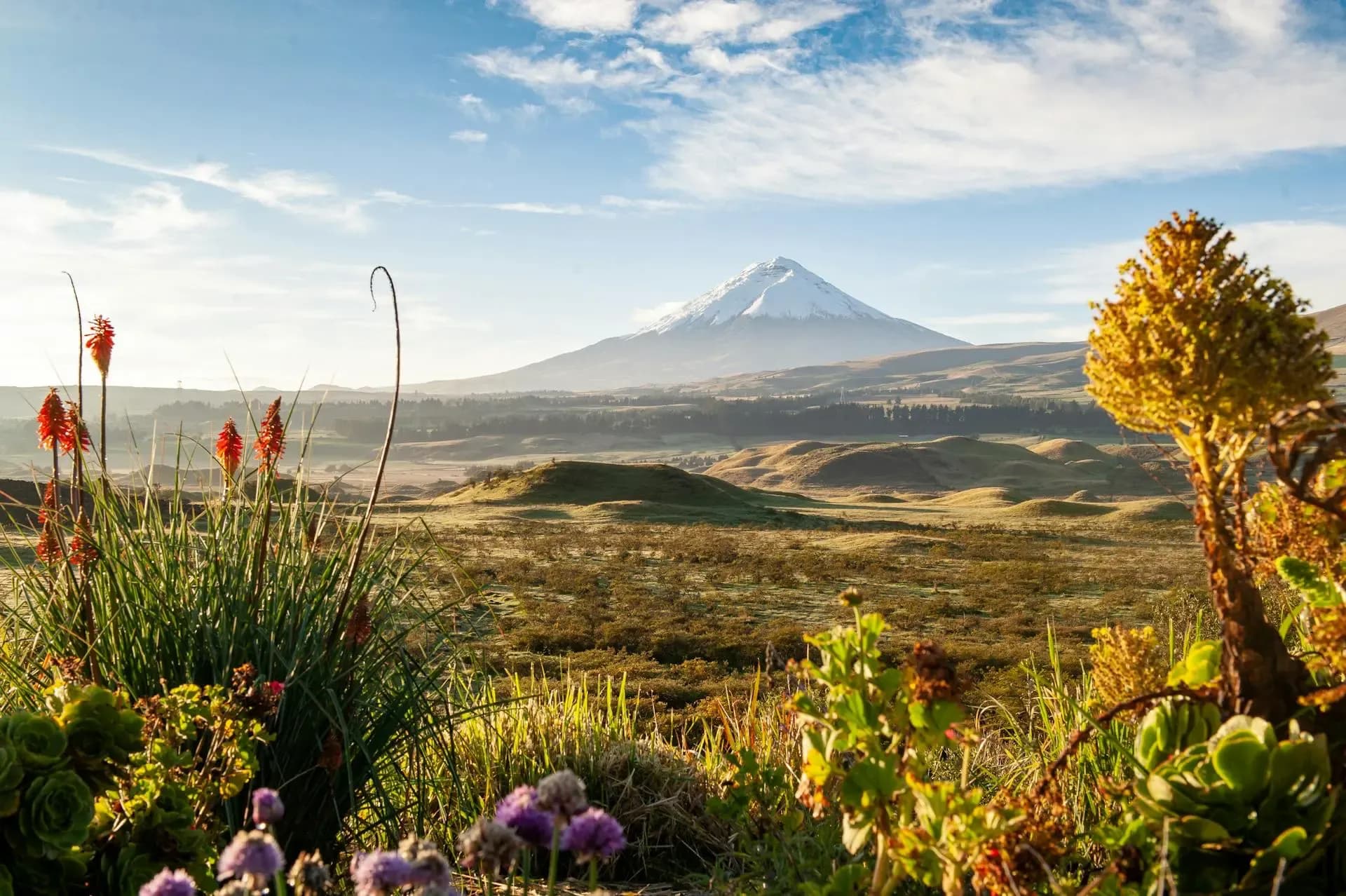
Ecuador's central highlands, dubbed the Avenue of the Volcanoes by Alexander von Humboldt, feature some of the most dramatic landscapes in South America. Our Ecuador Volcano Avenue Adventure covers the highlights.
Key Volcanoes
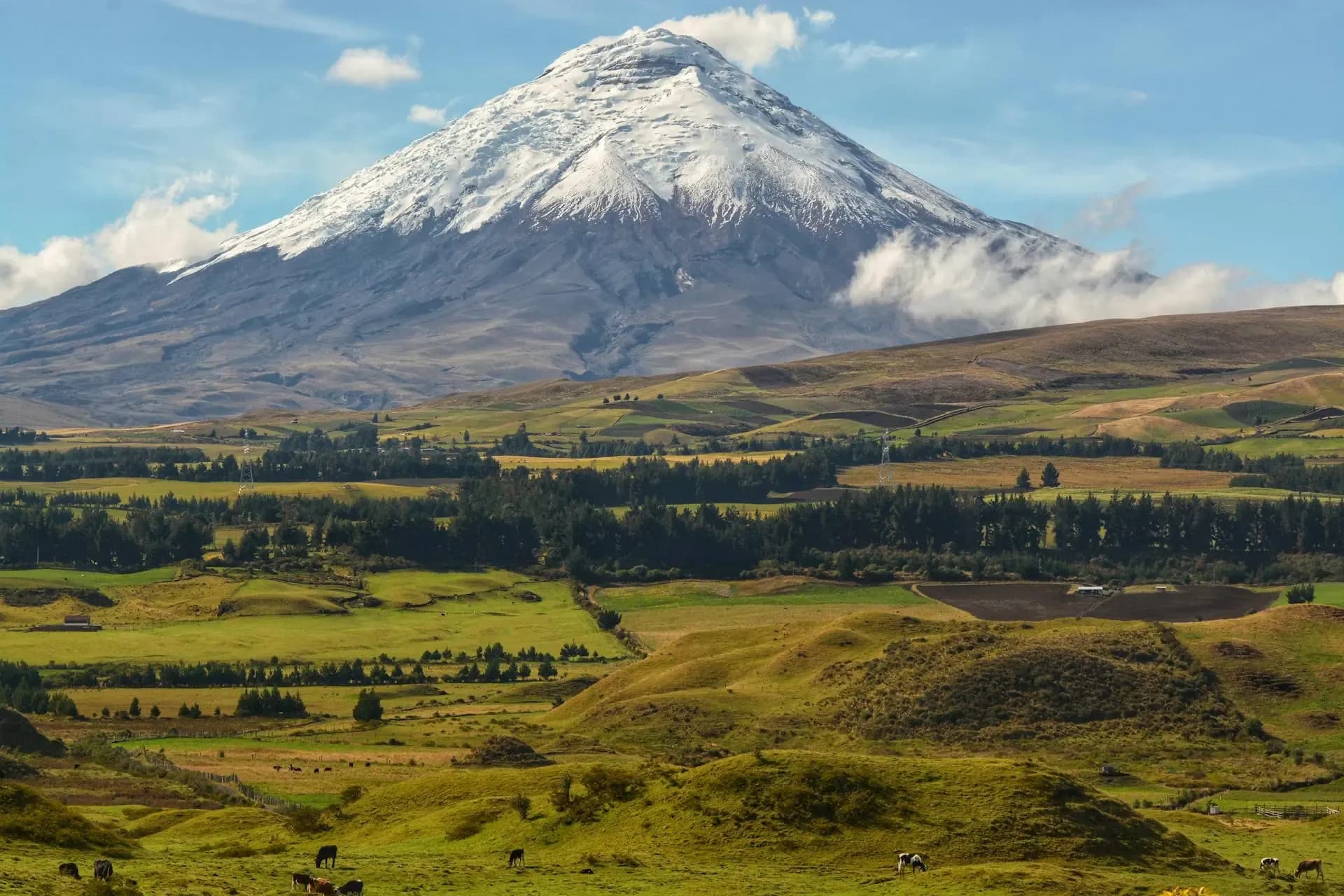
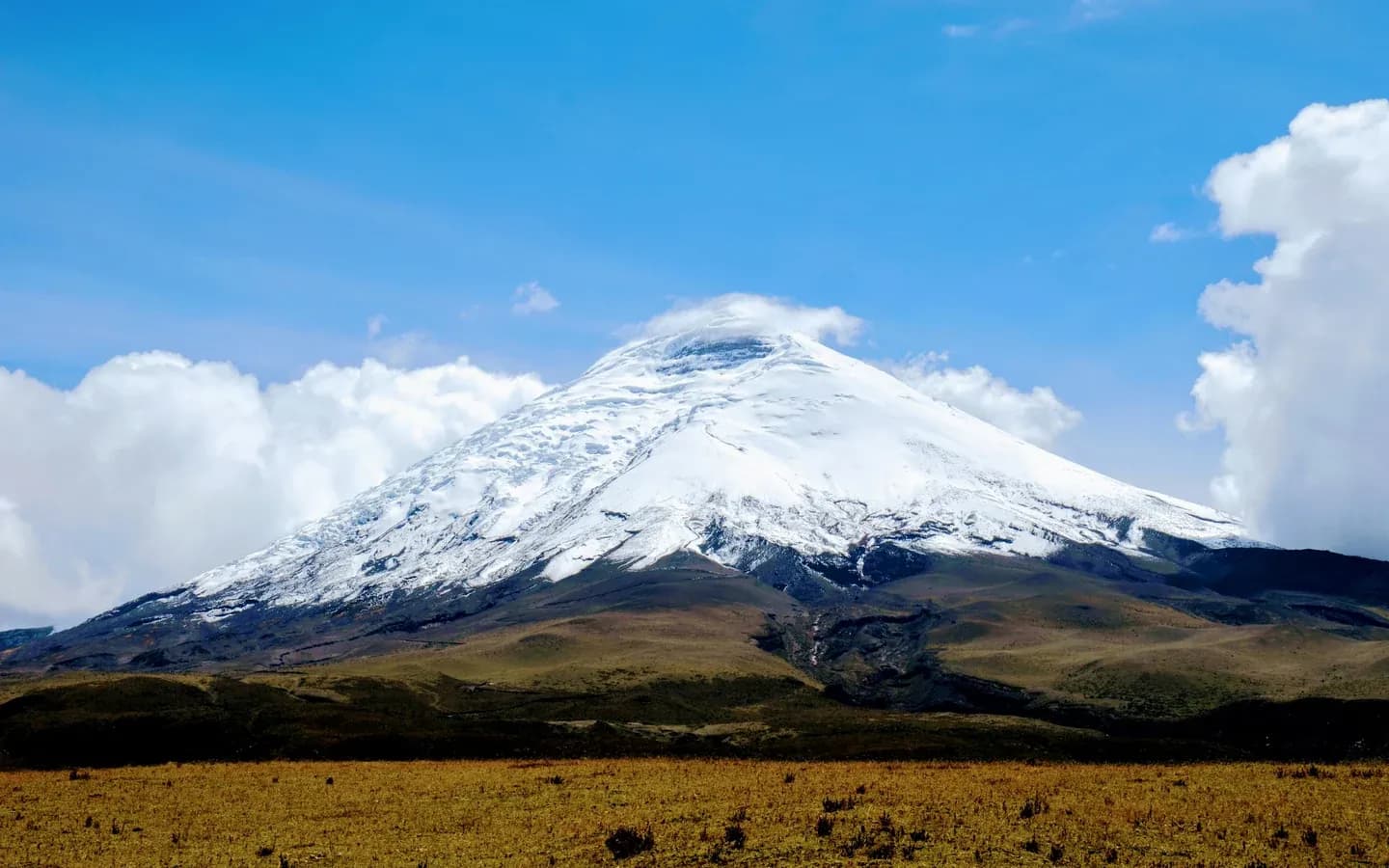
Cotopaxi (5,897m), The world's highest active volcano. Trek to the refuge at 4,800 metres for extraordinary views, or mountain bike down the slopes.
Chimborazo (6,263m), Ecuador's highest peak and technically the closest point on Earth's surface to the sun (due to the equatorial bulge). Trek to the first refuge at 5,000 metres.
Quilotoa, A stunning emerald-green crater lake at 3,914 metres. The Quilotoa Loop is a popular multi-day hike through indigenous communities.
Highland Towns
Otavalo, Famous for South America's largest indigenous market (every Saturday). Textiles, crafts, leather goods and fresh produce.
Banos, The adventure capital of Ecuador. White-water rafting, zip-lining, canyoning and hot springs beneath the active Tungurahua volcano.
Riobamba, The starting point for the legendary Nariz del Diablo (Devil's Nose) railway descent, a hair-raising series of switchbacks down a near-vertical cliff face.
Cuenca & the Southern Highlands
Cuenca is Ecuador's third-largest city and arguably its most beautiful. The colonial centre is another UNESCO World Heritage Site, with flower-filled plazas, elegant churches and a slower pace than Quito.
New Cathedral, The iconic blue-domed Catedral de la Inmaculada, visible from across the city
Cajas National Park, A hauntingly beautiful landscape of glacial lakes and paramo grassland just 30 minutes from the city
Panama hats, Despite the name, Panama hats originate in Ecuador. Cuenca is the centre of production, visit a workshop to see the weaving process
Ingapirca, Ecuador's most important Inca ruins, 80 kilometres north of Cuenca
The Amazon Rainforest
Ecuador's slice of the Amazon Basin, known locally as the Oriente, is one of the most biodiverse regions on Earth and relatively easy to access from Quito.
Amazon Lodges
Napo Wildlife Centre (Yasuni National Park), A community-owned eco-lodge deep in primary rainforest. Parrot clay licks, canopy towers, and giant otter-watching.
La Selva Lodge, A luxury option on a private lake with excellent wildlife viewing
Cuyabeno Reserve, Flooded forest with pink river dolphins, caimans and hundreds of bird species
A 3-4 night lodge stay is ideal. Fly from Quito to Coca (30 minutes) then travel by motorised canoe into the jungle. Expect early morning bird walks, canopy observation, night hikes, and visits to indigenous Kichwa communities.
The Pacific Coast
Ecuador's coast is often overlooked but offers beautiful beaches, whale watching and excellent seafood.
Montanita, Ecuador's surf and party town with consistent waves and a backpacker vibe
Whale watching (June to September), Humpback whales migrate to Ecuador's coast to breed. The best viewing is from Puerto Lopez and Isla de la Plata (the "poor man's Galapagos")
Manta and the Ruta del Spondylus, A coastal road linking fishing villages, archaeological sites and quiet beaches
Best Time to Visit Ecuador
Ecuador's climate varies dramatically by altitude and region:
Galapagos: Excellent year-round. Warmer, wetter months (January to May) bring calmer seas and better snorkelling. Cooler months (June to December) bring the Humboldt Current, nutrient-rich waters and more wildlife activity.
Highlands (Quito, Cotopaxi, Cuenca): Drier from June to September. The wettest months are March and April. Temperatures are fairly constant year-round (15-20°C in Quito).
Amazon: Hot and humid year-round (25-35°C). The drier months (September to December) have lower water levels and more accessible trails.
Coast: Warm and sunny January to May. Cooler and drier June to November.
Best overall months: June to September for the highlands and Galapagos combined. October and November offer fewer crowds.
Practical Information for UK Travellers
Visa & Entry
UK passport holders can enter Ecuador visa-free for up to 90 days. Your passport must be valid for at least 6 months. You may need to show proof of onward travel.
Flights
No direct flights from the UK. Best connections via Madrid (Iberia), Amsterdam (KLM) or Bogota (Avianca). Total travel time approximately 14-16 hours with one stop to Quito.
Altitude
Quito is at 2,850 metres, mild altitude symptoms are common on arrival. Drink plenty of water, avoid heavy meals and alcohol, and take it easy on the first day. Coca tea helps.
Safety
Ecuador is generally safe for tourists. Quito's Old Town, the Galapagos, the Avenue of the Volcanoes and Cuenca are all well-established tourist areas. Take normal precautions in cities: avoid flashy jewellery, use registered taxis, and keep valuables secure.
Currency
Ecuador uses the US dollar (USD), no currency exchange needed if you bring dollars. Cards are accepted in cities and tourist areas. Carry small bills and coins for markets and rural areas.
Vaccinations
Yellow fever vaccination is recommended for the Amazon region. Consult your GP or a travel clinic at least 6 weeks before departure.
How Travelfab Plans Your Ecuador Holiday
We design tailor-made Ecuador itineraries that combine the country's extraordinary diversity into one seamless trip. Popular routes include:
Ecuador Highlights (10-12 days): Quito + Avenue of the Volcanoes + Amazon + Cuenca
Ecuador & Galapagos (14-16 days): Mainland highlights plus a 4-8 day Galapagos expedition cruise
Galapagos Focus (8-10 days): Quito + extended Galapagos cruise with both eastern and western island routes
Our Ecuador Volcano Avenue Adventure is a great starting point, get in touch to customise it or build something entirely bespoke. All holidays include ATOL financial protection.
Frequently Asked Questions
No. UK passport holders can enter Ecuador visa-free for up to 90 days. Your passport must be valid for at least 6 months beyond your travel dates.
Plan Your Ecuador Adventure
Andes, Amazon and Galapagos, our specialists design tailor-made Ecuador holidays with ATOL protection.
DESTINATIONS
Explore these places
Galapagos Islands
Galapagos Islands expedition cruises with expert naturalist guides. Giant tortoises, marine iguanas, blue-footed boobies. ATOL-protected UK specialist.
Ecuador
Tailor-made Ecuador and Galapagos holidays from the UK. Andean volcanoes, Amazon lodges and island wildlife, planned around you. ATOL protected.