
DESTINATION GUIDES
2 Weeks in Colombia: The Perfect UK Traveller's Itinerary
Two weeks in Colombia, from Andean Bogota to the Caribbean coast, with the Coffee Region and Medellin in between. A route that rushes none of it.

Two weeks is the ideal length for Colombia. It allows ample time to immerse yourself in the country's remarkable diversity, Andean highlands, coffee country, a revitalised metropolis, and Caribbean coast, without hurrying through any region. Sample superb cuisine, savour world-class coffee at origin, explore colonial cities rivalling Europe's finest, and conclude on some of the continent's most stunning beaches.
This recommended route is ideal for UK travellers visiting Colombia for the first time. It guides you through four distinct regions at a pace that balances exploration and relaxation. While each day includes suggested activities, these are flexible, this is your trip. The beauty of a tailor-made holiday is setting your own rhythm as you move from one experience to the next.
Getting There from the UK
Avianca offers direct daily flights from London Heathrow to Bogota, about 11 hours, making Colombia one of the most accessible South American destinations from the UK. Flights usually depart in the evening and arrive in Bogotá early in the morning, allowing time to acclimate.
UK passport holders enter Colombia visa-free for up to 90 days. Your passport must be valid for at least 6 months beyond your travel dates. No pre-registration or visa application is needed.
Days 1-3: Bogota, Culture at Altitude
Where you stay: La Candelaria or Chapinero, Bogota's most characterful neighbourhoods with boutique hotels, excellent restaurants and easy access to the city's highlights.
Day 1: Arrival and Acclimatisation
Bogota sits at 2,640 metres above sea level, high enough to cause mild symptoms such as headaches, fatigue, or breathlessness for the first 24 hours. Take it easy on your first day.
- Arrive from London in the morning. Private transfer to your hotel.
- Settle, then explore your neighbourhood on foot. If staying in La Candelaria, wander the paved streets and admire the colonial facades and street art.
- Light lunch at a local restaurant, try changua, Bogota's traditional egg and milk broth, or an empanada from a street vendor.
- Afternoon rest. Drink plenty of water and avoid alcohol on your first day.
- Evening: gentle dinner in the neighbourhood. Most people feel noticeably better by the following morning.
Day 2: Colonial Bogota and the Gold Museum
- Morning at the Museo del Oro (Gold Museum), the finest collection of pre-Hispanic gold artefacts in the world, with over 55,000 pieces. Allow 2 hours, free admission on Sundays.
- Walk to the Museo Botero, a free museum housing Fernando Botero's distinctive paintings and sculptures alongside works by Picasso, Monet and Dali.
- Lunch at Paloquemao Market, a vast, colourful produce market where you can try exotic fruits you have never encountered: lulo, guanabana, feijoa, pitahaya. Many stalls serve fresh juices and cooked meals.
- Afternoon: take the funicular or cable car up Monserrate (3,152 metres) for panoramic views over the entire city. The white church at the summit is a pilgrimage site, and the views at sunset are spectacular.
- Evening: dinner in Chapinero, Bogota's most exciting dining neighbourhood.
Day 3: Usaquen and Local Life
- Morning at the Usaquen neighbourhood, a charming village-within-a-city in northern Bogota with a famous Sunday flea market (if your visit falls on a Sunday), independent shops and excellent brunch spots.
- Visit the Museo Nacional, Colombia's oldest museum, housed in a former prison, covering the country's history from pre-Colombian civilisations to the present.
- Afternoon: explore La Candelaria's street art scene on a guided walking tour. Bogota has one of the most lively street art cultures in the world, with murals covering entire buildings.
- Evening: farewell dinner in Bogota. Try ajiaco, the city's signature dish, a hearty chicken-and-potato soup with cream, capers, and avocado.
Days 4-6: The Coffee Region, Cloud Forest and Perfect Coffee
Getting there: A 25-minute flight from Bogota to Armenia or Pereira, followed by a 45-minute transfer to Salento. Alternatively, scenic overland transfer (7-8 hours) through the Andes.
Where you stay: A traditional coffee finca (farm) or boutique lodge near Salento, surrounded by coffee plants, birdsong and rolling green hills.
Day 4: Arrival and Coffee Farm Tour
- Morning flight to the Coffee Region. Transfer to your accommodation.
In the afternoon, join a coffee farm tour at a working finca. Observe the complete process, from harvesting to tasting. Coffee sampled here is distinct from supermarket varieties, an unforgettable highlight of your trip.
- Evening: dinner at the finca or in Salento. The region is known for fresh trout from mountain streams.
Day 5: Cocora Valley
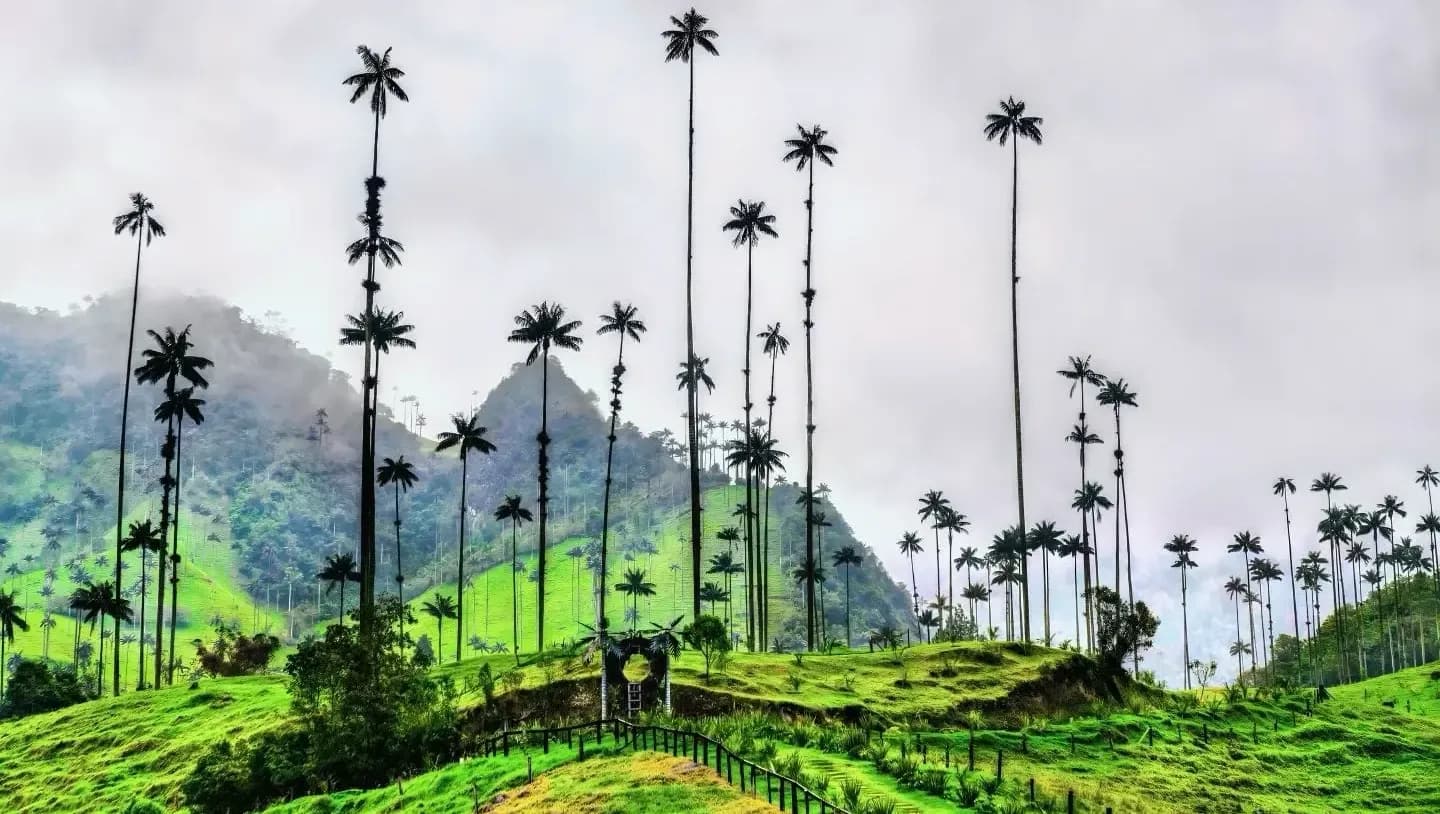
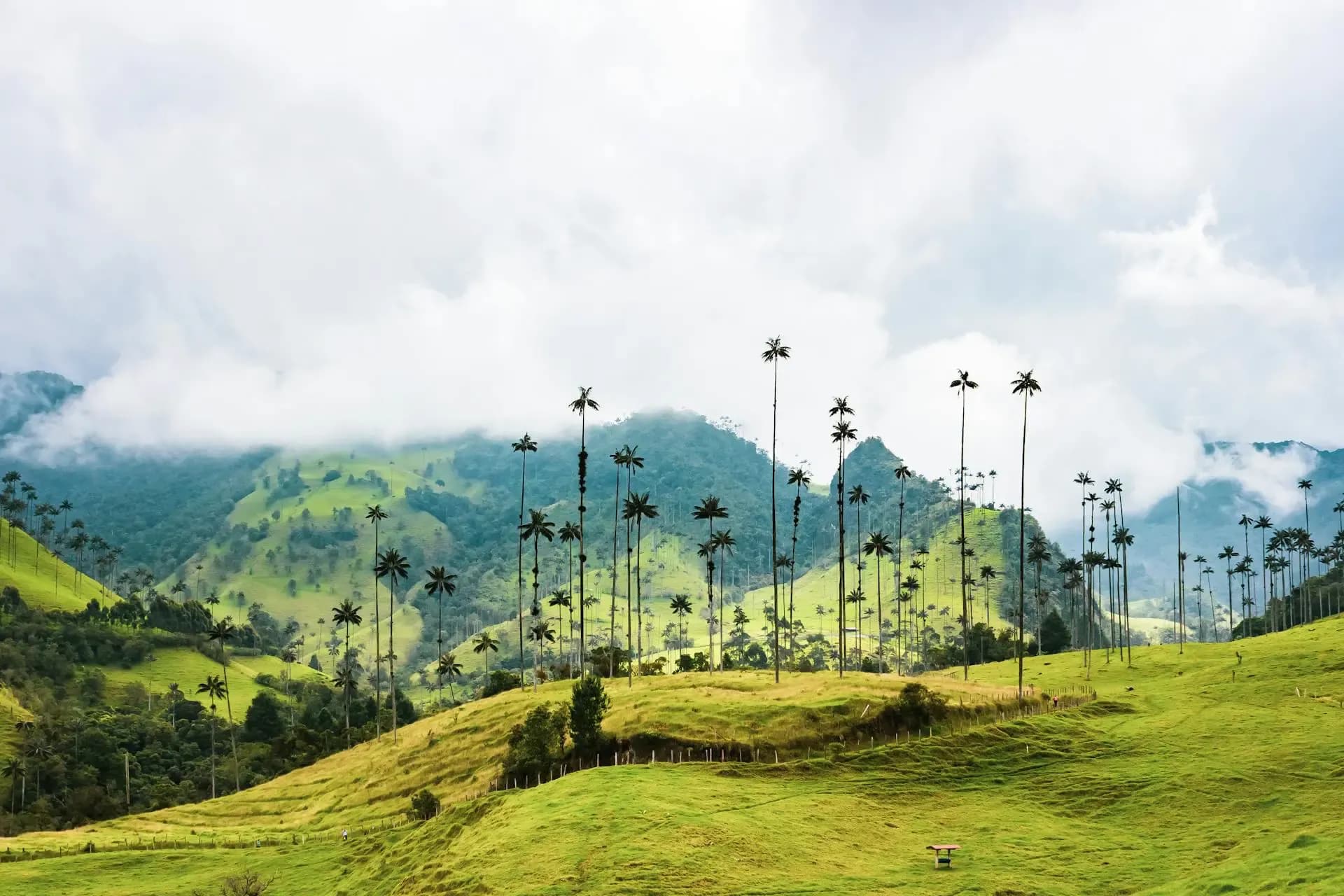
Spend a full day in the Cocora Valley, where Colombia's national tree, the wax palm, grows up to 60 metres tall among misty mountains. The landscape feels almost prehistoric, with towering palms silhouetted against the clouds. The main hiking trail forms a circular loop and takes approximately 5-6 hours to traverse. Cross rivers on wooden bridges, climb to a hummingbird sanctuary, and descend through a valley studded with palms. Moderate fitness is required for this rewarding adventure.
- Lunch at a trout restaurant in the valley, freshly caught, grilled over wood fire.
- Afternoon: explore Salento itself, a beautifully preserved colonial coffee town with colourful facades, artisan shops and the Calle Real lined with craft stalls.
- Evening: watch the sunset from Salento's mirador (viewpoint) overlooking the Quindio valley.
Day 6: Hot Springs and Filandia
- Morning: visit the Termales de Santa Rosa, natural hot springs situated in the mountains, surrounded by tropical vegetation. Soak in thermal pools fed by volcanic water, a perfect recovery after yesterday's hike.
After your morning soak, drive to Filandia, a quieter alternative to Salento with charming architecture and a breathtaking viewpoint over the coffee landscape. While there, visit a local panela production workshop and discover the secrets of raw sugar cane.
- Evening: final dinner in the Coffee Region. Try bandeja paisa, the Antioquian national dish of beans, rice, chicharron, fried egg, plantain and ground beef.
Days 7-9: Medellin, City of Eternal Spring
Getting there: A scenic 4-5 hour drive from the Coffee Region through the Andes, or a short connecting flight via Bogota.
Where you stay: El Poblado, Medellin's most upscale neighbourhood with the city's best restaurants, bars and boutique hotels, surrounded by greenery in a pleasant valley climate.
Day 7: Comuna 13 and City Overview
Start your day with a guided visit to Comuna 13, once Colombia's most dangerous neighbourhood, now a vibrant outdoor gallery that reflects Medellín's transformation. You'll meet local guides, many of whom grew up here, as they lead you through mural-filled streets alive with breakdancing crews and hip-hop artists. Ride the outdoor escalators connecting this hillside community to the city below. Many consider this one of the most powerful cultural experiences in South America.
- Lunch in the neighbourhood, street food stalls serving empanadas, arepas and fresh juices.
- Afternoon: ride the Metro Cable gondola system for panoramic views over the city. Medellin's public transport, metro, cable cars, outdoor escalators, is a model of urban innovation.
- Visit the Jardin Botanico (Botanical Garden), a peaceful oasis in the city centre with an impressive orchid collection and a striking wooden butterfly house.
- Evening: dinner and drinks in El Poblado's Parque Lleras area.
Day 8: Guatape Day Trip
- Full day trip to Guatape, a colourful lakeside town approximately 2 hours east of Medellin.
Highlighting the visit is the Piedra del Peñol, a massive granite monolith towering over the lakeside. Climb the 740 steps built into a crack in the rock for 360-degree views over a vast lake filled with islands and peninsulas. You'll find this to be one of Colombia's most iconic photo opportunities.
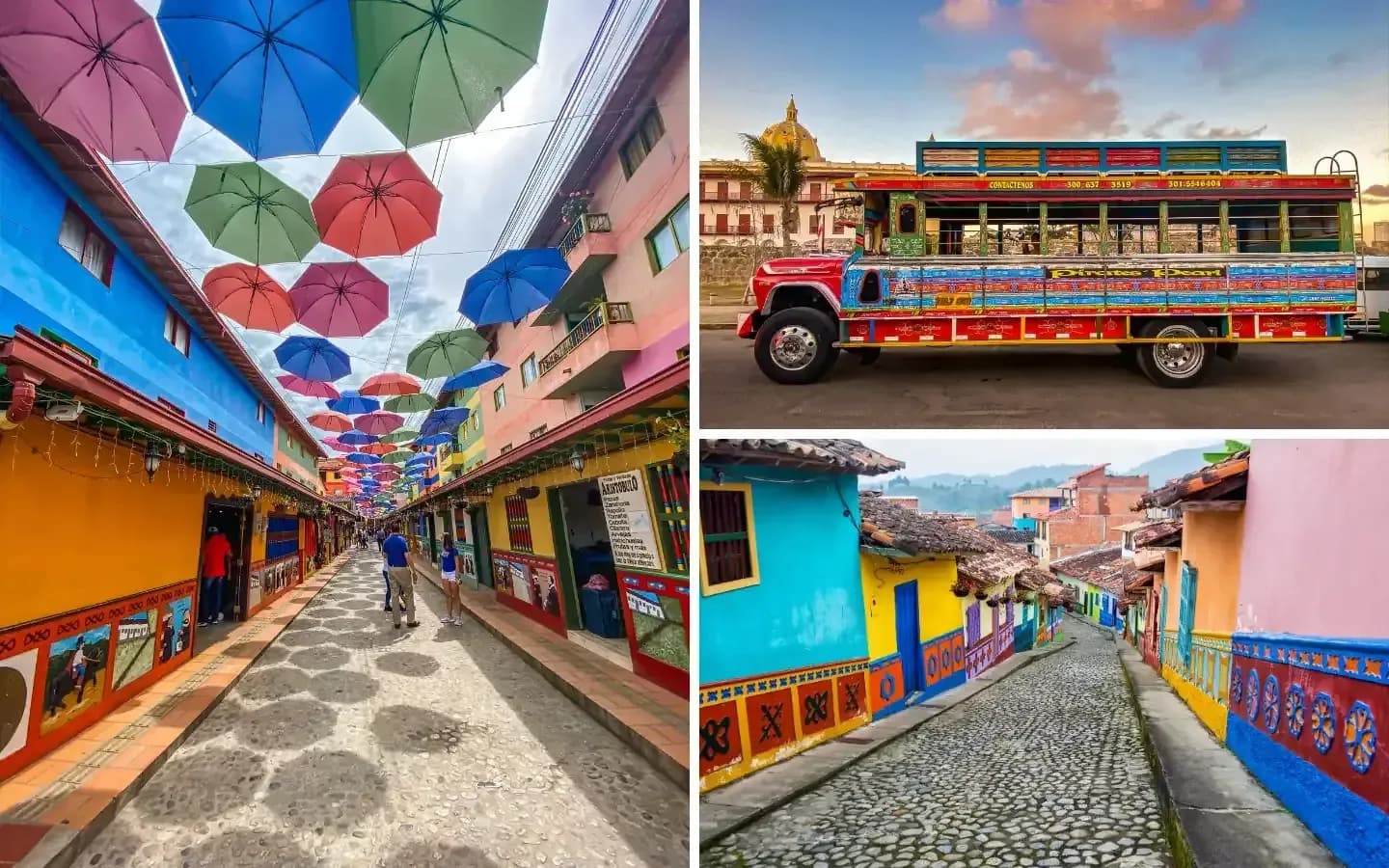
- Explore the town itself, famously colourful, with every building decorated with zocalos (painted relief panels) depicting local life, animals and folklore.
- Lunch at a lakeside restaurant. Boat trips on the lake are available for those who want to explore the islands.
- Return to Medellin in the late afternoon.
Day 9: Art, Food and Nightlife
- Morning: visit Plaza Botero in the city centre, an open-air collection of 23 Fernando Botero sculptures. The adjacent Museo de Antioquia houses more of his work alongside other Colombian artists.
- Explore the Laureles neighbourhood, less touristy than El Poblado, with local bakeries, neighbourhood restaurants and a more authentic Medellin atmosphere.
- Afternoon: free time for shopping, a cooking class, or a visit to the Parque Arvi nature reserve accessible by Metro Cable.
- Evening: Medellin has one of the best nightlife scenes in South America. Explore salsa clubs in Laureles, rooftop bars in El Poblado, or live music venues. Medellin's year-round spring climate (20-28 degrees Celsius) makes outdoor evenings a pleasure.
Days 10-14: The Caribbean Coast, Cartagena and Beyond
Getting there: A 1-hour direct flight from Medellin to Cartagena.
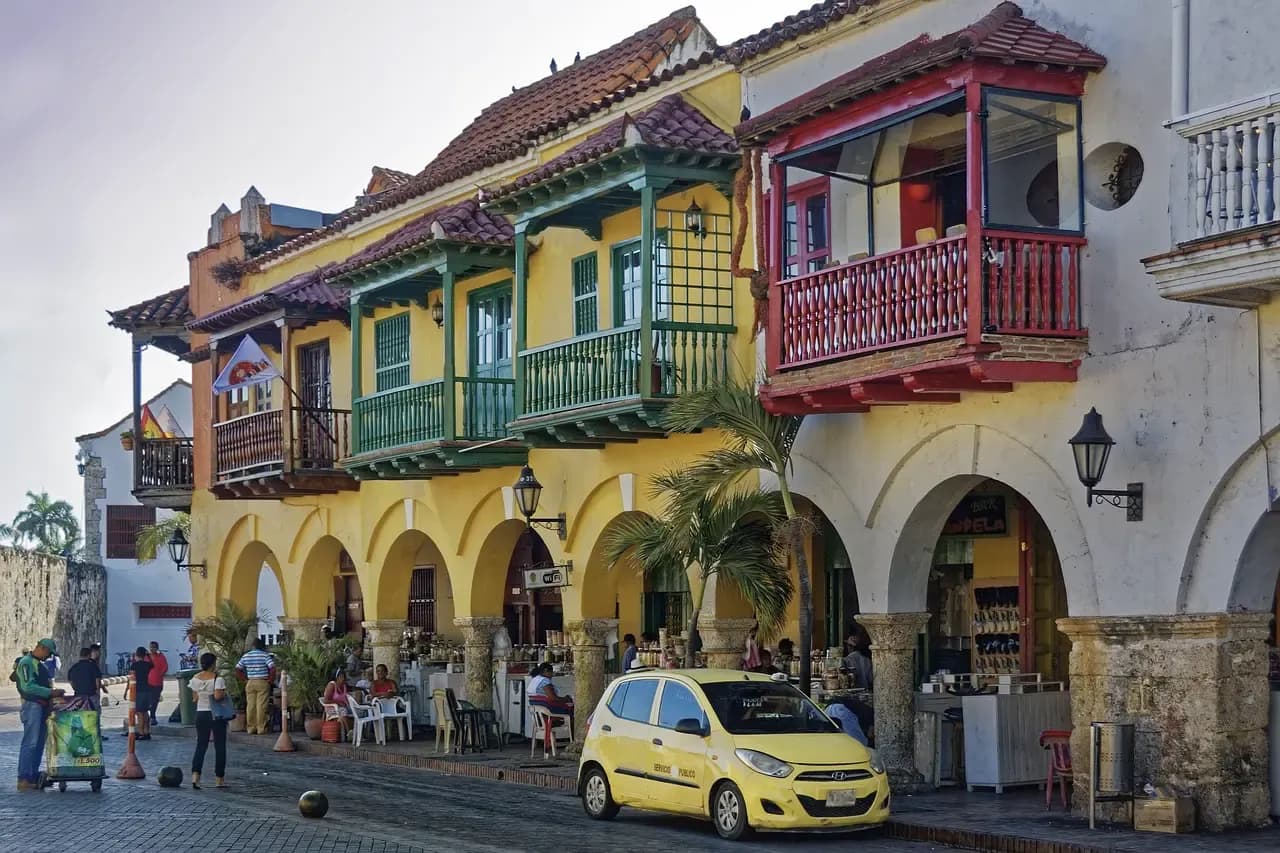
Where you stay: Inside the walled Old Town or in neighbouring Getsemani, the most atmospheric places to stay, surrounded by colonial architecture, restaurants and nightlife.
Day 10: Arrival in Cartagena
- Morning flight to Cartagena. The contrast with Medellin is immediate, Caribbean heat, colonial architecture, the sound of salsa from open doorways.
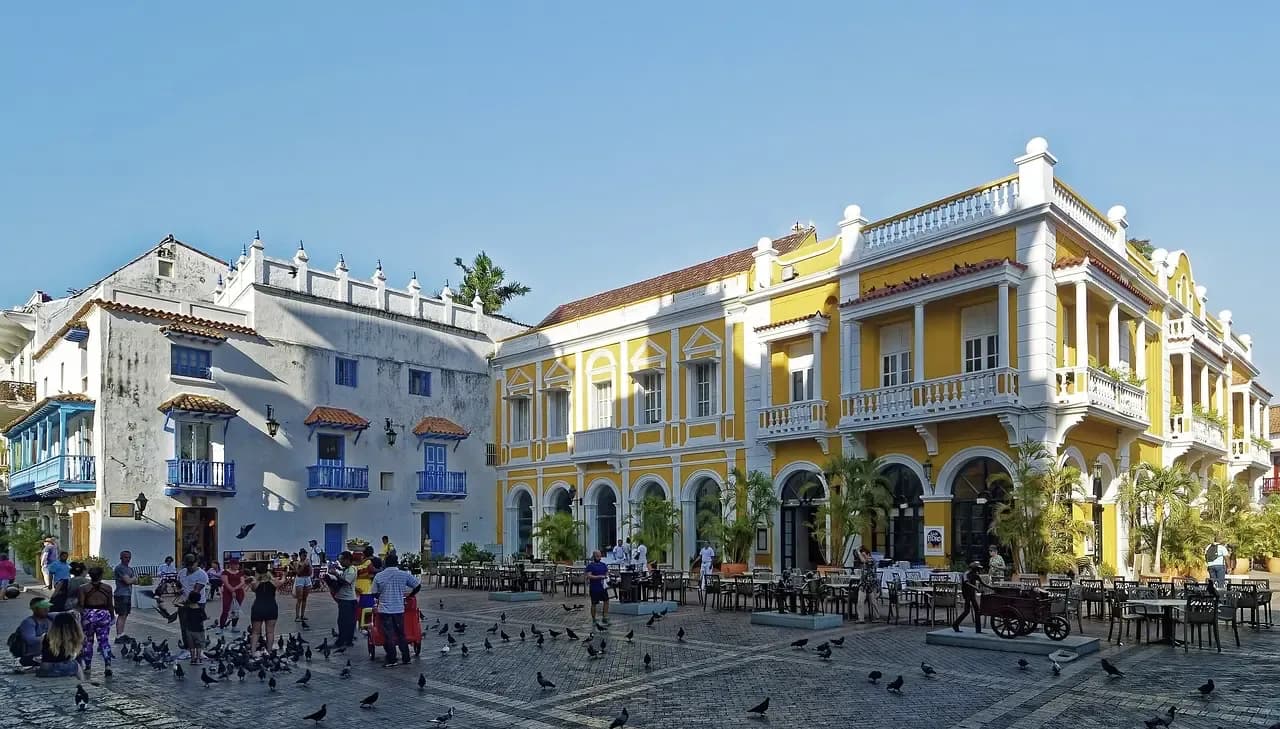
- Settle into your hotel and explore the Ciudad Amurallada (walled Old Town) on foot. Wander through the Plaza Santo Domingo (the liveliest square, with Botero's famous reclining sculpture), past the Torre del Reloj (Clock Tower) and along the ramparts of the city walls.
- Lunch at a courtyard restaurant in the Old Town. Try ceviche de camarones, Caribbean-style prawn ceviche with coconut and lime.
- Afternoon: visit the Castillo de San Felipe de Barajas, the massive Spanish fortress overlooking the city. Walk the tunnels and ramparts for panoramic views. Built in 1536, it is one of the most impressive military fortifications in the Americas.
- Evening: sunset drinks on the city walls, followed by dinner in the Old Town.
Day 11: Getsemani and Culture
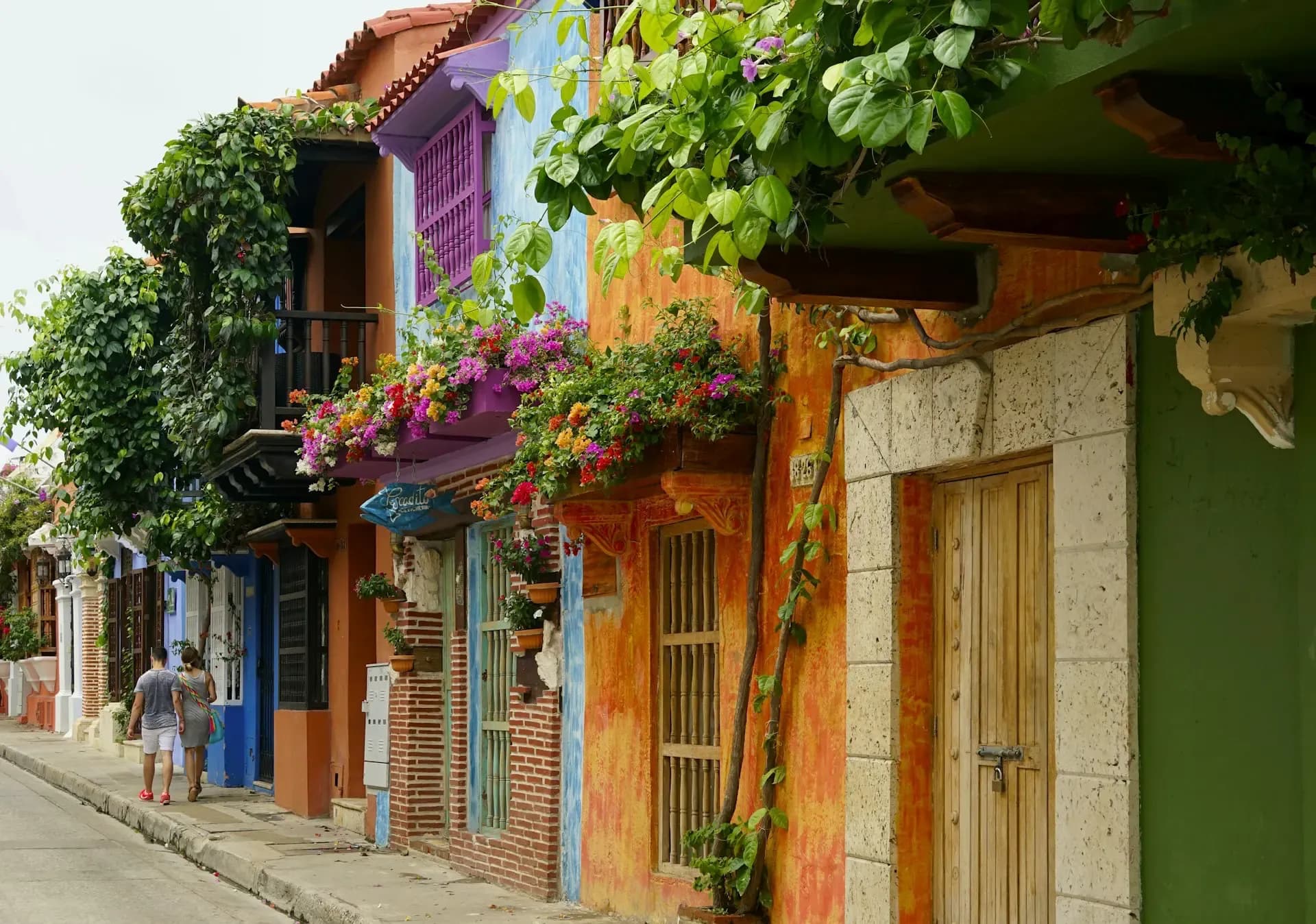
- Morning: explore Getsemani, Cartagena's most vibrant neighbourhood, just outside the walls. Once a working-class barrio, it is now the creative heart of the city, covered in street art murals with independent cafes, rooftop bars and the buzzing Plaza de la Trinidad.
- Visit the Palace of the Inquisition, a beautifully restored colonial building housing a museum of the Spanish Inquisition. Sobering but fascinating.
- Walk through Las Bovedas, former military vaults beneath the city walls, now converted into artisan shops and galleries.
- Afternoon: browse the markets. The Bazurto Market (with a local guide) is Cartagena's chaotic, authentic food market, an intense experience of tropical fruits, fresh fish, spices and street food. Not for the faint-hearted, but really memorable.
- Evening: cocktails in a rooftop bar in Getsemani, dinner in the Old Town.
Day 12: Rosario Islands
- Full day trip to the Islas del Rosario, a 45-minute speedboat ride from Cartagena.
- Crystal-clear Caribbean water, coral reefs, and tiny islands with beach clubs. Snorkel over colourful reefs, swim in warm turquoise water, and lunch on freshly caught fish on a private island.
- The Rosario archipelago comprises 27 small islands, some with simple beach bars, others with more developed facilities. Your guide will select the best option for your group.
- Return to Cartagena in the late afternoon.
- Evening: farewell dinner at one of Cartagena's finest restaurants. The city's dining scene has matured enormously, from traditional Caribbean cuisine to inventive fusion.
Day 13: Free Day, Beach or Culture
Your final full day is deliberately unstructured. Options include:
- Playa Blanca, A stunning white-sand beach on the Baru peninsula, reachable by boat or road. A more local alternative to the Rosario Islands.
- Totumo Mud Volcano, A quirky experience: climb into the crater of a small mud volcano and float in warm, mineral-rich mud. Surprisingly relaxing.
- La Boquilla, A fishing village north of Cartagena, where you can kayak through mangroves with a local guide.
- Shopping and relaxation, Return to favourite spots in the Old Town, buy emeralds (Colombia produces the world's finest), or sit in a plaza with a coffee and watch the city go by.
- Evening: one last sunset from the city walls.
Day 14: Departure
- Morning at leisure before transfer to Cartagena airport.
- Direct flights to London via Bogota (connect same day) or overnight in Bogota for a morning departure.
Budget Guide
A tailor-made 14-day Colombia holiday with Travelfab typically costs £2,500-3,500 per person, depending on hotel category, experiences, and internal flights. This includes:
- Return flights from London to Colombia
- All internal flights (Bogota-Coffee Region, Medellin-Cartagena)
- 13 nights' boutique accommodation
- Private airport transfers
- Guided experiences (coffee farm, Comuna 13, Cocora Valley, Rosario Islands)
- Full ATOL protection (licence 10898)
Day-to-day spending in Colombia is very affordable. Expect £8-15 for a good restaurant meal, £2-4 for street food, and £1-2 for a world-class coffee.
Browse our Exploring Colombia holiday (12 nights) for a pre-designed version of this route, or our Favourites of Colombia (7 nights) for a shorter variation.
Packing Tips for 2 Weeks in Colombia
Colombia's climate varies dramatically by altitude, so layering is essential:
- Bogota (2,640m): Bring a warm jacket, layers, and a light raincoat. Temperatures range from 14 to 19 degrees Celsius year-round. Evenings can be cool.
- Coffee Region (1,500-2,000m): Comfortable during the day but cool at night. Layers, hiking boots for Cocora Valley, and rain gear.
- Medellin (1,500m): T-shirts and light trousers. The "City of Eternal Spring" sits at a comfortable 20-28 degrees Celsius.
- Cartagena (sea level): Hot and humid (28-32 degrees Celsius). Light, breathable clothing. Sunscreen is essential.
- General: comfortable walking shoes, insect repellent (especially for rural areas), a reusable water bottle, and adaptors for Colombian Type A/B sockets (same as US plugs).
Best Time for This Itinerary
This route works best during Colombia's dry seasons:
- December to March, The primary dry season. Ideal weather across all four regions. This is peak season, so book well in advance.
- July to August, A second dry window, particularly good for the Andes (Bogota, Coffee Region) and Medellin. Cartagena is warm year-round but slightly wetter.
- Shoulder months (April-June, September-November), Rain falls in short afternoon bursts. Fewer tourists, lower prices, and the landscapes are at their greenest.
How Travelfab Tailors This Trip
Every itinerary we build is personalised. Common adjustments include:
- Add Tayrona National Park (2-3 days), Jungle-backed Caribbean beaches near Santa Marta, reachable from Cartagena
- Extend the Coffee Region (1-2 days), Add the Cocora Valley's lesser-known trails, a chocolate workshop, or a day in Filandia
- Shorten to 8 days, Our Favourites of Colombia route covers Bogota, Medellin and Cartagena in 7 nights
- Add the Lost City trek (5 days), A jungle trek to an archaeological site that predates Machu Picchu
- Swap Medellin for San Andres, Caribbean island life instead of urban culture
Our Colombia destination page has the full picture. Contact us to design your perfect 2-week itinerary.
Frequently Asked Questions
Two weeks is ideal for a first visit, covering the four essential regions: Bogota, the Coffee Region, Medellin and Cartagena. You will experience the country's diversity without being rushed. If you want to add Tayrona National Park or the Lost City trek, consider extending to 17-18 days. Our Exploring Colombia holiday covers the core route in 12 nights.
Let Us Build Your 2-Week Colombia Trip
Our specialists will tailor your perfect Colombia itinerary with flights from the UK, handpicked hotels, and local guides. ATOL protected.
MORE FROM TRAVELFAB
Holidays you might like
DESTINATIONS
Explore these places
KEEP READING
More stories
Colombia's Coffee Region: A UK Traveller's Guide to the Eje Cafetero
Explore Colombia's Eje Cafetero. Salento, Cocora Valley, coffee farm stays and hot springs. Essential guide for UK travellers.
Colombia Travel Guide 2026: Cartagena, Coffee Country & Beyond
Complete Colombia travel guide for UK visitors. Cartagena, Bogota, coffee region, Caribbean coast, safety tips and best time to visit.