
DESTINATION GUIDES
Colombia's Coffee Region: A UK Traveller's Guide to the Eje Cafetero
Explore Colombia's Eje Cafetero. Salento, Cocora Valley, coffee farm stays and hot springs. Essential guide for UK travellers.
The first morning in Colombia's coffee country starts the same way for everyone. You step outside, the air is cool and damp, and you can smell roasting beans before you see another person. Somewhere below the cloud line, farmers are already picking.
The Eje Cafetero, Colombia's Coffee Triangle, does not get the same attention as Cartagena or Medellin, which is part of what makes it worth the trip.
Spanning the departments of Quindio, Risaralda and Caldas in the central Andes, the Coffee Region was designated a UNESCO World Heritage Cultural Landscape in 2011. The recognition was not just for the coffee itself, but for the entire way of life that has evolved around it, the colourful fincas (farmhouses), the ancient cultivation techniques, and the communities that have shaped these mountains for over a century.
For UK travellers, it is one of the easier parts of Colombia to fall for, good walking, good food, cooler temperatures than the coast, and a slower pace that makes you want to stay longer than planned. It fits well between Cartagena and Bogota on a wider itinerary, or works as a destination in its own right. For more on planning a full Colombia trip, see our Colombia Travel Guide.
Where to Go in the Coffee Region
The Eje Cafetero is compact enough to explore in three to five days, but each town has its own character.
Salento
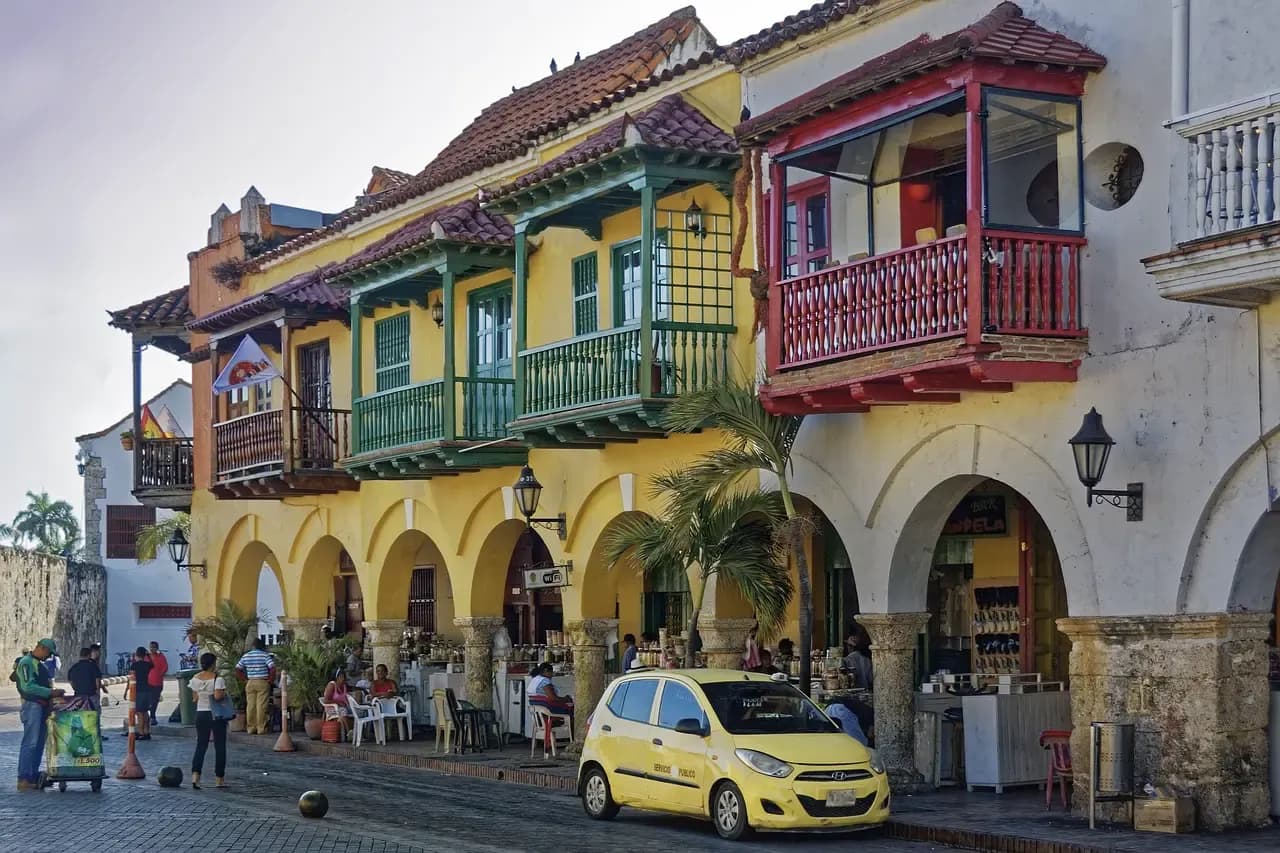
Salento is the heart of the Coffee Region experience. This small colonial town in Quindio department is a postcard of colourful facades, flower-draped balconies and cobblestone streets climbing towards a hilltop mirador with views across the entire valley.
The main street, Calle Real, is lined with artisan shops selling hand-woven bags, coffee accessories and local ceramics. At the far end, 253 steps lead up to the Alto de la Cruz viewpoint, worth every step for the panorama of green mountains stretching to the horizon.
Salento is also famous for its trout restaurants. Rainbow trout thrive in the cold mountain streams here, and virtually every restaurant serves it, grilled, fried, in garlic butter, wrapped in plantain leaves. Paired with patacones (fried green plantain) and a fresh lulo juice, it is one of Colombia's most satisfying meals.
Tip: Salento is busiest at weekends when Colombian families visit. Arrive midweek for quieter streets and easier access to the Cocora Valley.
Cocora Valley
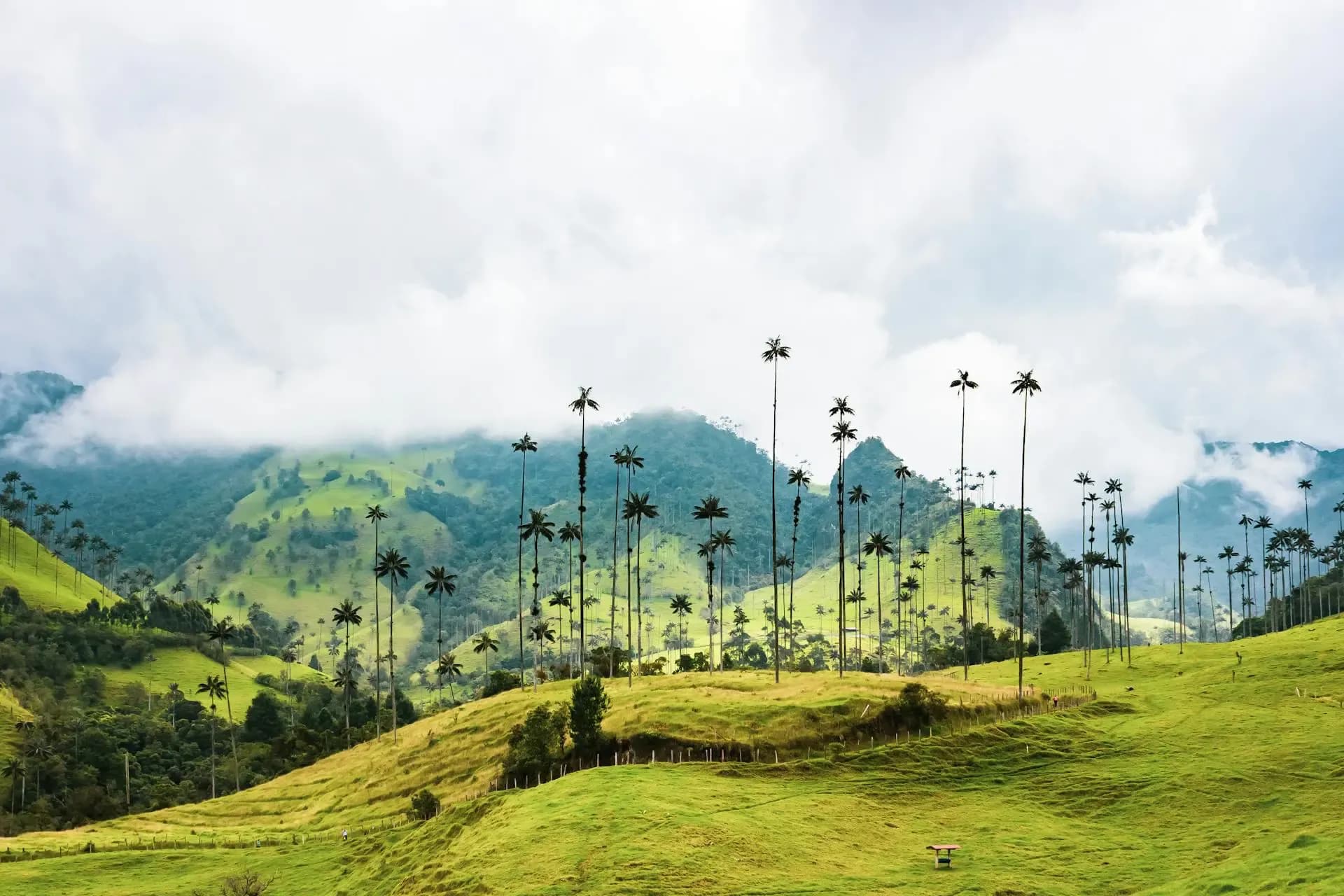
A 20-minute jeep ride from Salento's main square takes you to the Valle de Cocora, and a landscape that stops most people mid-sentence.
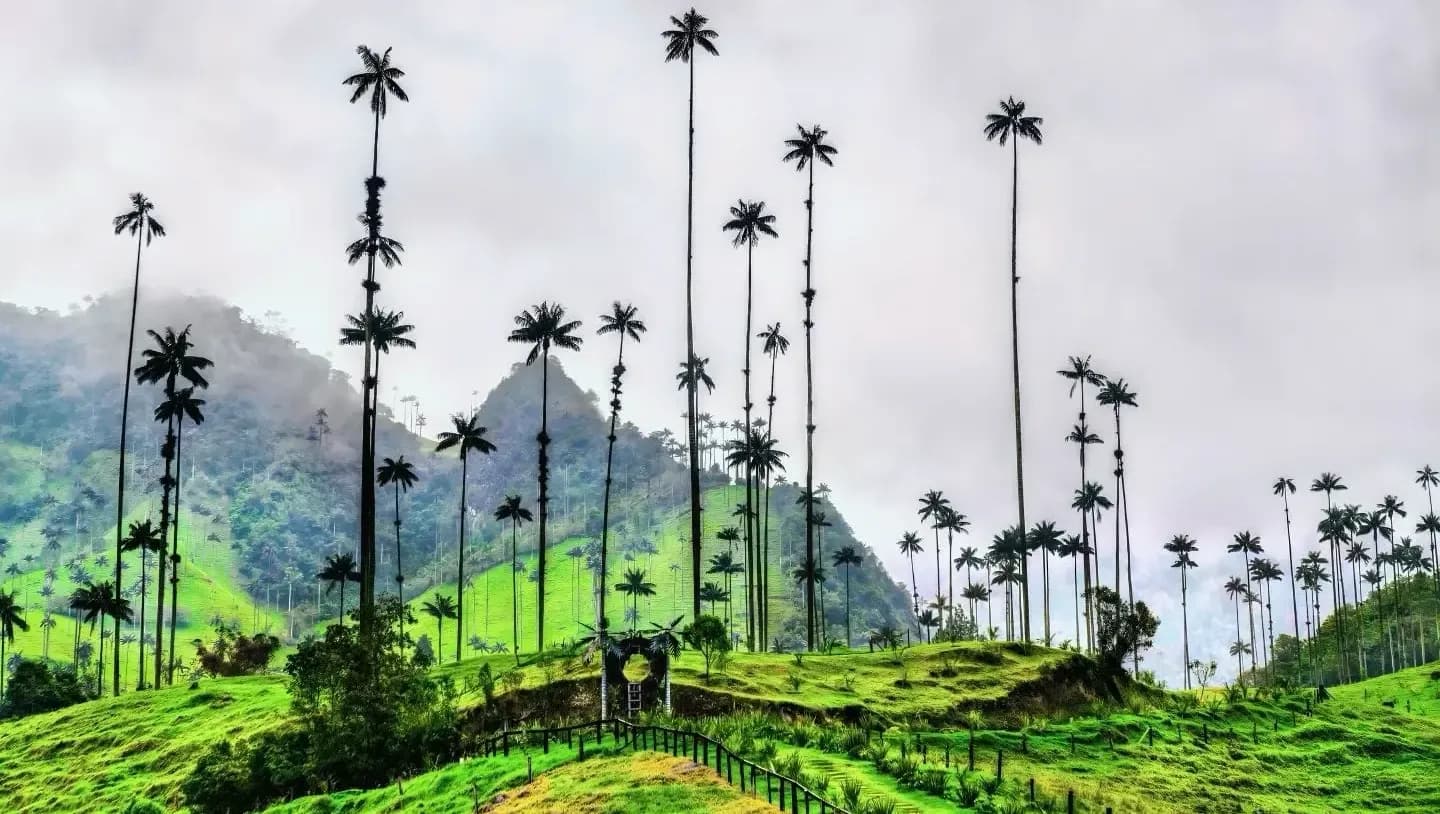
The wax palm (palma de cera del Quindio) is Colombia's national tree, and it grows nowhere else in the world at this scale. These palms reach heights of up to 60 metres on trunks that look far too thin to hold. They grow out of bright green pastures and disappear into low cloud. Photographs never quite capture it.
The classic hiking loop takes four to five hours and follows a well-marked trail through the valley floor, up into cloud forest (where hummingbirds dart between flowering trees), past a small trout farm, and back down through the palm groves. The trail is moderate in difficulty, muddy in places and with some steep sections, but manageable for anyone with reasonable fitness. Hire walking boots or bring sturdy footwear with grip.
Filandia
If Salento feels too busy (it can, especially at weekends), Filandia is the quieter alternative that locals prefer. This small town sits on a ridge with a spectacular mirador overlooking the Quindio valley, arguably an even better viewpoint than Salento's.
Filandia has a thriving artisan basket-weaving tradition. The colourful cesteria (woven baskets and bags) are made from iraca palm fibres and sold throughout the town. The central plaza is peaceful, the coffee shops are excellent, and the pace is unhurried.
Manizales
The capital of Caldas department, Manizales is a university city perched at 2,160 metres on a ridge with dramatic views of the surrounding volcanoes. On clear mornings, you can see the snow-capped peak of Nevado del Ruiz (5,321 metres), an active volcano that has shown activity as recently as 2023.
Manizales is more urban than Salento or Filandia, but it has excellent museums, a lively cafe culture, and is the gateway to the region's best hot springs. The city's Recinto del Pensamiento botanical garden and butterfly sanctuary is worth a visit, and the cable car ride across the valley to the nearby town of Neira offers stunning aerial views.
Pereira
Pereira is the largest city in the Coffee Triangle and the most practical gateway. Most visitors pass through rather than linger, but it has a pleasant botanical garden (the Jardin Botanico de la Universidad Tecnologica), good restaurants, and excellent transport connections.
The Otun Quimbaya Flora and Fauna Sanctuary on the outskirts of Pereira protects a pocket of Andean cloud forest rich in birdlife, a worthwhile half-day excursion for nature enthusiasts.
Coffee Farm Experiences
A visit to a working finca cafetera (coffee farm) is the centrepiece of any trip to the Eje Cafetero. This is not a museum tour, you are visiting a real, producing farm where coffee is the family's livelihood.
What a Farm Visit Involves
A typical coffee farm tour lasts two to three hours and walks you through the entire journey from plant to cup:
The plantation, Walking through rows of coffee plants on steep hillsides, learning to identify the ripe red cherries ready for picking. In harvest season (October to December and April to June), you can pick cherries yourself.
Processing, Watching the cherries being de-pulped, washed, fermented and dried. The difference between washed and natural processing methods is explained, and you will taste the difference.
Roasting, Seeing (and smelling) green beans transformed in the roaster. Many farms still use traditional wood-fired methods alongside modern equipment.
Tasting, The highlight. A cupping session where you taste different roast levels, origins and processing methods side by side. You will never look at your morning coffee the same way.
Best Farms to Visit
Finca El Ocaso (near Salento), One of the most popular and well-organised farms, with English-speaking guides. The tour covers organic cultivation and includes a tasting of their single-origin coffee.
Hacienda Guayabal (near Manizales), A family-run farm that offers overnight stays. Sleeping on a working coffee finca, surrounded by hummingbirds and mountain views, is an experience that lingers.
Recuca (near Salento), A more immersive, theatrical experience where visitors don traditional coffee-picker clothing and participate in the harvest. Fun for families and groups.
Don Elias (near Salento), A small, family-run organic farm with an intimate, personal tour. Less polished than some, but authentic and memorable.
What to Expect
Wear comfortable clothes that can get dirty, you will be walking through muddy plantation rows. Bring a light rain jacket (afternoon showers are common at altitude) and sunscreen. Most farms charge between £5 and £15 per person. Book ahead during peak season or arrange through your hotel.
Beyond Coffee
The Eje Cafetero is far more than coffee. The combination of altitude, tropical latitude and varied terrain creates extraordinary biodiversity.
Birdwatching
Colombia has more bird species than any other country, nearly 2,000 at last count, and the Coffee Region is a particularly good place to see them. The mix of cloud forest, farmland, and altitude changes packs a lot of habitat into a small area.
Within the Eje Cafetero alone, more than 600 species have been recorded. Highlights include:
Andean cock-of-the-rock, Colombia's most spectacular bird, with males displaying in groups (leks) at dawn
Toucan barbet, A rare, colourful bird endemic to the western Andes
Multicoloured tanagers, hummingbirds and motmots, The cloud forest canopy is alive with colour
The Rio Blanco Nature Reserve near Manizales is world-famous among birders, with over 380 species recorded within its boundaries.
Hot Springs
The volcanic geology of the region feeds several natural hot springs, exactly what you want after a day on your feet.
Termales de Santa Rosa, The most famous and arguably the most beautiful. Natural thermal pools set among lush forest, with a waterfall cascading into the main pool. The contrast of cool mountain air and hot mineral water is sublime. Located between Pereira and Manizales.
Termales del Otoño, A quieter option near Manizales with multiple pools at different temperatures and excellent views.
Hiking
Beyond the Cocora Valley, the region offers excellent hiking:
Los Nevados National Park, For experienced hikers, the trek towards the snowline of Nevado del Ruiz offers otherworldly paramo landscape, high-altitude grassland studded with frailejones (giant rosette plants).
Otun Quimbaya Sanctuary, Cloud forest trails through one of the last refuges of the spectacled bear.
Local Food
Coffee Region cuisine is hearty mountain food:
Bandeja paisa, The iconic Paisa platter: red beans, rice, ground beef, chicharron (fried pork belly), fried egg, plantain, avocado and arepa. It is enormous.
Arepas, Flatbreads made from ground maize, served at every meal. In the Coffee Region, they are often filled with cheese.
Trucha, Freshwater trout, the speciality of Salento, served grilled with garlic and herbs.
Aguapanela, Hot sugarcane water with lime, the traditional farmer's drink. Simple and surprisingly addictive.
Cholado, A refreshing shaved-ice dessert piled with tropical fruits, condensed milk and fruit syrup. A Pereira speciality.
How to Get There
The Coffee Region sits in the centre of Colombia, well connected to the major cities.
By Air
The quickest route from the UK is to fly to Bogota (Avianca operates daily direct flights from London Heathrow, approximately 10 hours) and then take a short domestic flight:
Bogota to Pereira (Matecana airport), 45 minutes, multiple daily flights
Bogota to Armenia (El Eden airport), 45 minutes, less frequent but closer to Salento
Flights are also available from Cartagena and Medellin to Pereira.
By Road
From Medellin, Approximately 5 hours by road through dramatic mountain scenery. A spectacular drive, and many travellers combine Medellin with the Coffee Region.
From Bogota, 7-8 hours by road (flying is far preferable).
Best Combined Itineraries
The Coffee Region fits naturally into several classic Colombia routes:
Bogota + Coffee Region + Cartagena (10-12 days), The classic circuit. See our Colombia & Its Different Cultures holiday.
Bogota + Coffee Region + Medellin + Caribbean Coast (13-16 days), The comprehensive route. See Exploring Colombia.
Cartagena + Coffee Region + Bogota + Pacific Coast (12-14 days), Culture and nature combined.
Best Time to Visit
The Coffee Region sits at 1,200 to 2,000 metres above sea level, giving it a cooler, more comfortable climate than Colombia's coastal lowlands. Daytime temperatures are typically 18-24°C year-round, pleasant for hiking and exploration.
Dry Seasons
December to February, The main dry season. Clear skies, excellent visibility for volcano views, and the best conditions for the Cocora Valley hike.
June to August, A second dry spell. Slightly quieter than the Christmas period and good value.
Wet Seasons
March to May and September to November, Wetter months, but rain typically falls in short, heavy afternoon bursts. Mornings are often clear. The landscape is at its greenest, and there are far fewer tourists.
Coffee Harvest
If you want to participate in the harvest, the main picking seasons are October to December and April to June. Farm tours run year-round, but seeing the full harvest in action is a special experience.
Our recommendation: Visit in January or February for the best weather, or October to November for harvest season and lower prices. For advice on safety and practical planning, read our Colombia safety guide.
Ready to Explore Coffee Country?
The Eje Cafetero tends to catch people off guard. Most visitors come for the coffee and end up remembering the walking, the food, and the conversations with farmers who are genuinely proud of what they grow.
Browse our Colombia holidays:
Favourites of Colombia, 7 nights, Bogota, Medellin and Cartagena in one filler-free week
Exploring Colombia, 12 nights, a deeper journey through Medellin, Coffee Country and the Caribbean coast
Roots & Rhythms of Colombia, 10 nights, Colombia's three main cities plus island time on San Andres
Colombia & Its Different Cultures, 10 nights, combining diverse regions, the Coffee Region included
All holidays include local guides, handpicked accommodation and ATOL protection. Contact us to start planning your Coffee Region adventure.
Frequently Asked Questions
Three to five days is ideal. This gives you time for the Cocora Valley hike, a coffee farm tour, a visit to Salento and Filandia, and a day at the hot springs. If you are a keen birder or hiker, you could easily spend a week.
Explore Colombia's Coffee Country
Our Colombia specialists will build a tailor-made itinerary including the Coffee Region, with local guides, farm stays, and ATOL protection.
MORE FROM TRAVELFAB
Holidays you might like
DESTINATIONS
Explore these places
KEEP READING
More stories

Is Colombia Safe? What UK Travellers Need to Know in 2026
Is Colombia safe? An honest answer for UK travellers: where the reputation is out of date, where care is still genuinely needed, and what the FCDO says.
Colombia Travel Guide 2026: Cartagena, Coffee Country & Beyond
Complete Colombia travel guide for UK visitors. Cartagena, Bogota, coffee region, Caribbean coast, safety tips and best time to visit.