
TRIP IDEAS
Costa Rica Volcanoes and Cloud Forests: How to Plan the Classic Trip
Plan a Costa Rica volcanoes and cloud forests holiday, Arenal, Monteverde and beyond, how to combine them, and when to go.

If there's one trip that sums up Costa Rica, it's the volcanoes and cloud forests run. It's the route I send most first-timers on, because it shows you the two landscapes the country does better than almost anywhere: smoking volcanic peaks with hot springs at their feet, and high-altitude cloud forests where you walk through the treetops in the mist. Put them back to back and you've got a week that feels like two holidays.
This is our guide to planning it, the volcanoes worth your time, the cloud forests that earn the climb, the classic route that links them, and how to shape it around the time you've got. We run Costa Rica holidays built on exactly this spine, ATOL 10898 protected, so I'll be straight about what's worth it.
The short version
The classic Costa Rica volcanoes and cloud forests holiday is Arenal Volcano first, then Monteverde Cloud Forest, two to three nights at each, linked by a half-day transfer around Lake Arenal. Arenal gives you the volcano, hot springs, waterfalls and hanging bridges; Monteverde gives you the cloud forest canopy, zip-lines and rare wildlife. Most people add a Pacific beach at the end to relax. Seven nights is plenty for the pair; ten lets you slow down or add a third region.
Why volcanoes and cloud forests go together
It's not a marketing pairing, it's geography. Costa Rica sits on a chain of volcanoes running down its spine, and as the land climbs, the forest changes. Above about 1,400 metres, near-constant cloud cover feeds a "cloud forest": a dripping, moss-draped, intensely green ecosystem found in only a handful of places on earth. So the volcanoes and the cloud forests are often neighbours, separated by an hour or two of mountain road. You can stand at a steaming volcano in the morning and walk through cloud forest the same afternoon.
The volcanoes
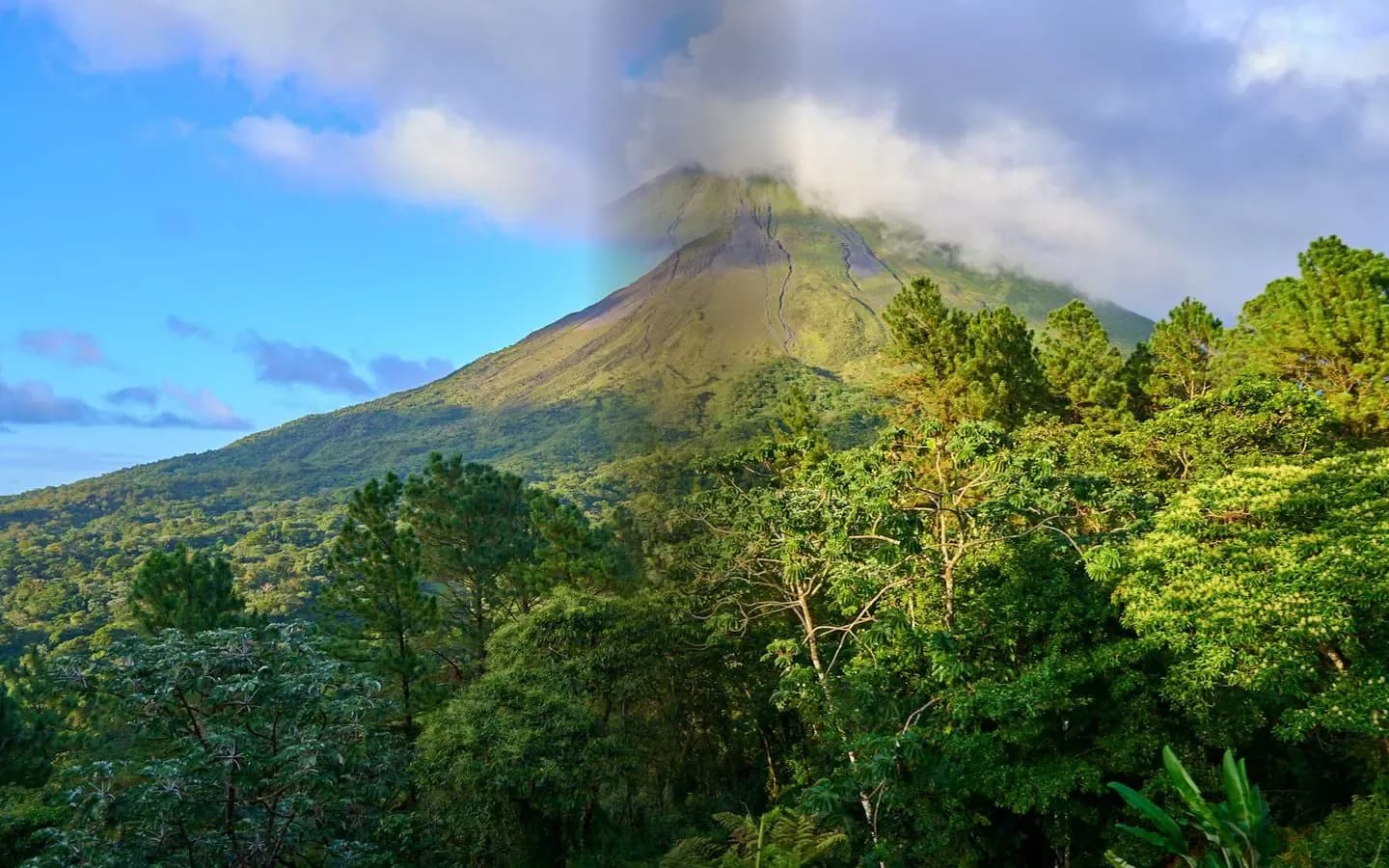
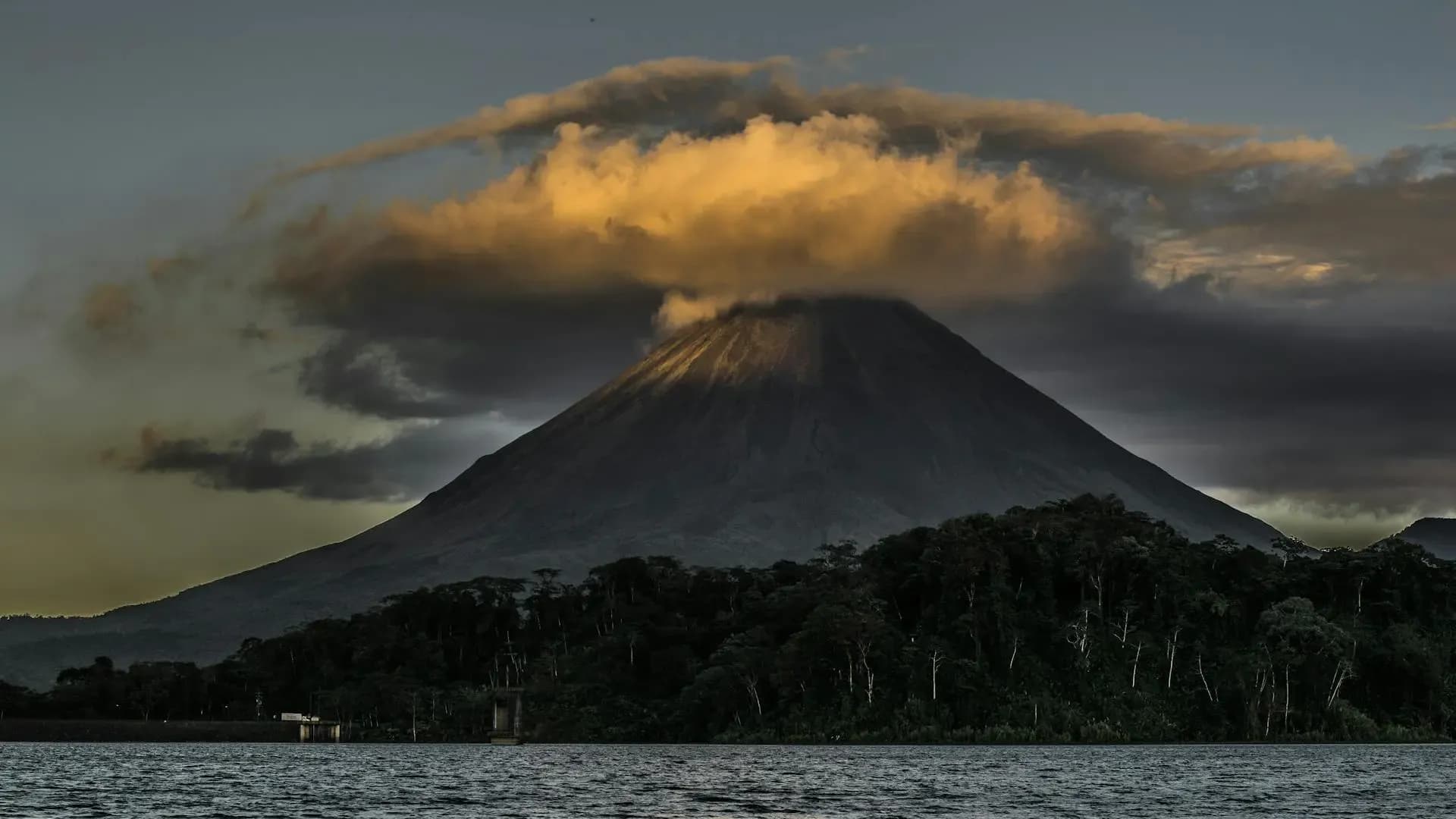
Arenal is the one everyone pictures, a textbook cone above the town of La Fortuna, ringed by rainforest, hot springs and waterfalls. It's the easiest volcano to base yourself near and the natural start of the trip.
Poás, close to San José, has one of the largest active craters in the world, with a turquoise acid lake you can look straight into from a viewing platform, an easy half-day if you fly in or out of the capital.
Rincón de la Vieja, in the north-west, is the adventurous choice: bubbling mud pots, fumaroles, and superb waterfall hikes, with far fewer crowds than Arenal.
Irazú, the country's highest volcano, gives you a moonscape crater and, on a clear day, a view of both the Caribbean and the Pacific.
You don't climb into active craters, you hike the forested flanks, soak in the volcanically heated springs, and take in the views. It's nature travel, not mountaineering.
The cloud forests
Monteverde is the famous one, and deservedly so: a private cloud forest reserve laced with trails and hanging bridges, where the resplendent quetzal, the three-wattled bellbird and hundreds of other species live. It's also the home of the canopy zip-line, invented here.
Santa Elena, next door, is quieter and just as atmospheric, a good alternative when Monteverde is busy.
San Gerardo de Dota and Los Quetzales, in the Talamanca mountains south of San José, are the serious birders' choice and the best place in the country to all but guarantee a quetzal sighting.
A cloud forest is a different experience to lowland rainforest: cooler, wetter, and quieter, with the canopy often level with the bridges you're standing on. Mornings are best, before the cloud thickens.
The classic route: Arenal to Monteverde
The two anchor regions sit on opposite sides of Lake Arenal, and the transfer between them is part of the fun. The quickest and most enjoyable way is the "jeep–boat–jeep": a 4x4 to the lake, a boat straight across with Arenal behind you, and another 4x4 up to Monteverde, about three hours door to door, against five or more by road around the lake. We build this into the itinerary so you don't lose a day driving.
Three or four nights split between the two covers the headline experiences without rushing. Our Costa Rica Nature Lovers and Costa Rica Explorer trips are both built around this volcano-and-cloud-forest core.
What you'll actually do
A volcanoes and cloud forests week is busier and more active than a beach holiday, in the best way:
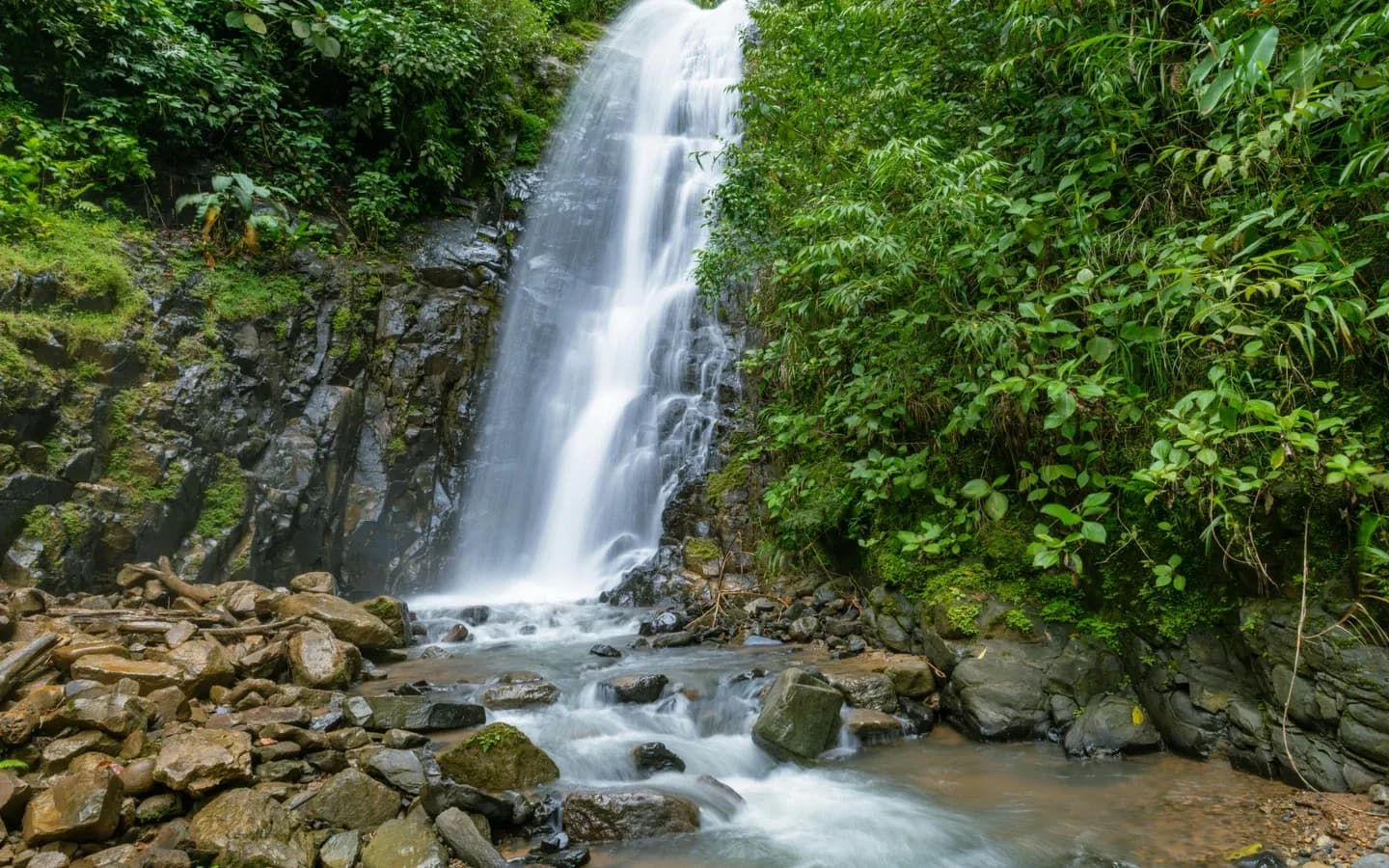
Soak in natural hot springs with Arenal in view, and chase the La Fortuna waterfall
Walk the hanging bridges through the rainforest and cloud-forest canopy
Zip-line above the treetops at Monteverde, the place that started it
Take a guided night walk to find frogs, snakes, sloths and kinkajous
Spot wildlife with a naturalist, quetzals, toucans, coatis, and if you're lucky, a tapir
Good local guides make the difference here; they find the wildlife you'd walk straight past, and ours come with every trip.
How to build your holiday
The volcanoes-and-cloud-forests pair is the backbone, and most trips hang one more thing off it. Add a few nights on a Pacific beach (Guanacaste or Manuel Antonio) to finish on the sand, or extend north to Rincón de la Vieja for a wilder, quieter volcano. With two weeks, you can fold in the Caribbean coast or the remote Osa. For the full picture of how regions slot together, see the 10-day Costa Rica itinerary and our roundup of the best places to visit in Costa Rica.
Want it built for you? Our Costa Rica Coast to Coast journey and our rainforest and volcano adventure both take in Arenal and the cloud forests, and if you’re weighing destinations, see Costa Rica vs Cuba.
Tell us how long you've got and we'll shape the route around it, and yes, you can fly into one airport and out of another to save backtracking.
When to go and what to pack
The December-to-April dry season is the most reliable, with clearer volcano views and easier trails; the green season (May to November) is lush, quieter and better value, with rain usually arriving in the afternoon. Cloud forests are misty and cool year-round, so bring a fleece and a light waterproof whatever the season, plus proper walking shoes for the trails and insect repellent for the lowlands. For the month-by-month detail, see the best time to visit Costa Rica.
Frequently Asked Questions
It's the country's classic nature route, pairing a volcano region, usually Arenal, with its hot springs, waterfalls and hanging bridges, with a cloud forest such as Monteverde, where you walk the misty canopy on bridges and zip-lines and look for rare wildlife like the quetzal. The two sit close together in Costa Rica's volcanic highlands, so they combine naturally into a week, often with a beach added at the end.
Plan Your Volcanoes & Cloud Forests Trip
Tell us how long you have and we'll build the Arenal–Monteverde route at the right pace, add a beach to finish if you like. ATOL 10898 protected, with vetted local guides throughout.
MORE FROM TRAVELFAB
Holidays you might like
DESTINATIONS
Explore these places
KEEP READING
More stories
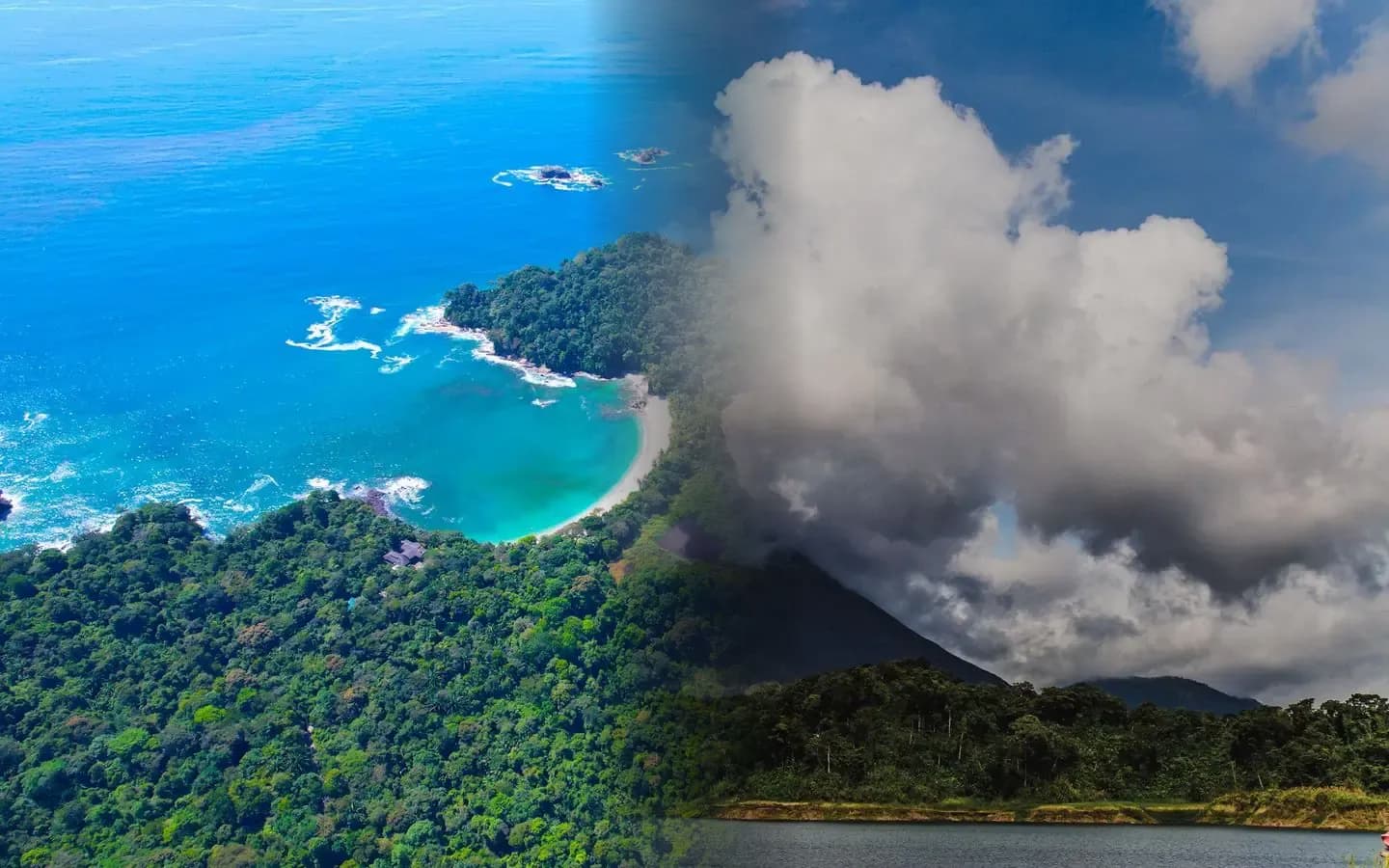
The Best Places to Visit in Costa Rica: A UK Traveller's Guide
The best places to visit in Costa Rica, volcanoes, cloud forest, wildlife parks and Pacific beaches, plus how to combine them.

Costa Rica Itinerary: The Perfect 10 Days for UK Travellers (2026)
A specialist's day-by-day 10-day Costa Rica itinerary for UK travellers, Arenal, Monteverde cloud forest and Manuel Antonio, plus when to go.
Best Time to Visit Costa Rica: Weather, Wildlife & Where to Go
A Costa Rica specialist's month-by-month guide, weather, wildlife seasons and the surprising best time to go. Plan your trip with Travelfab.