
DESTINATION GUIDES
Tortuguero, Costa Rica: How to Get There and Where to Stay
We flew into Tortuguero on a small plane and left by boat and bus. How to get there, the lodges we have seen, the canal tours and turtle season.
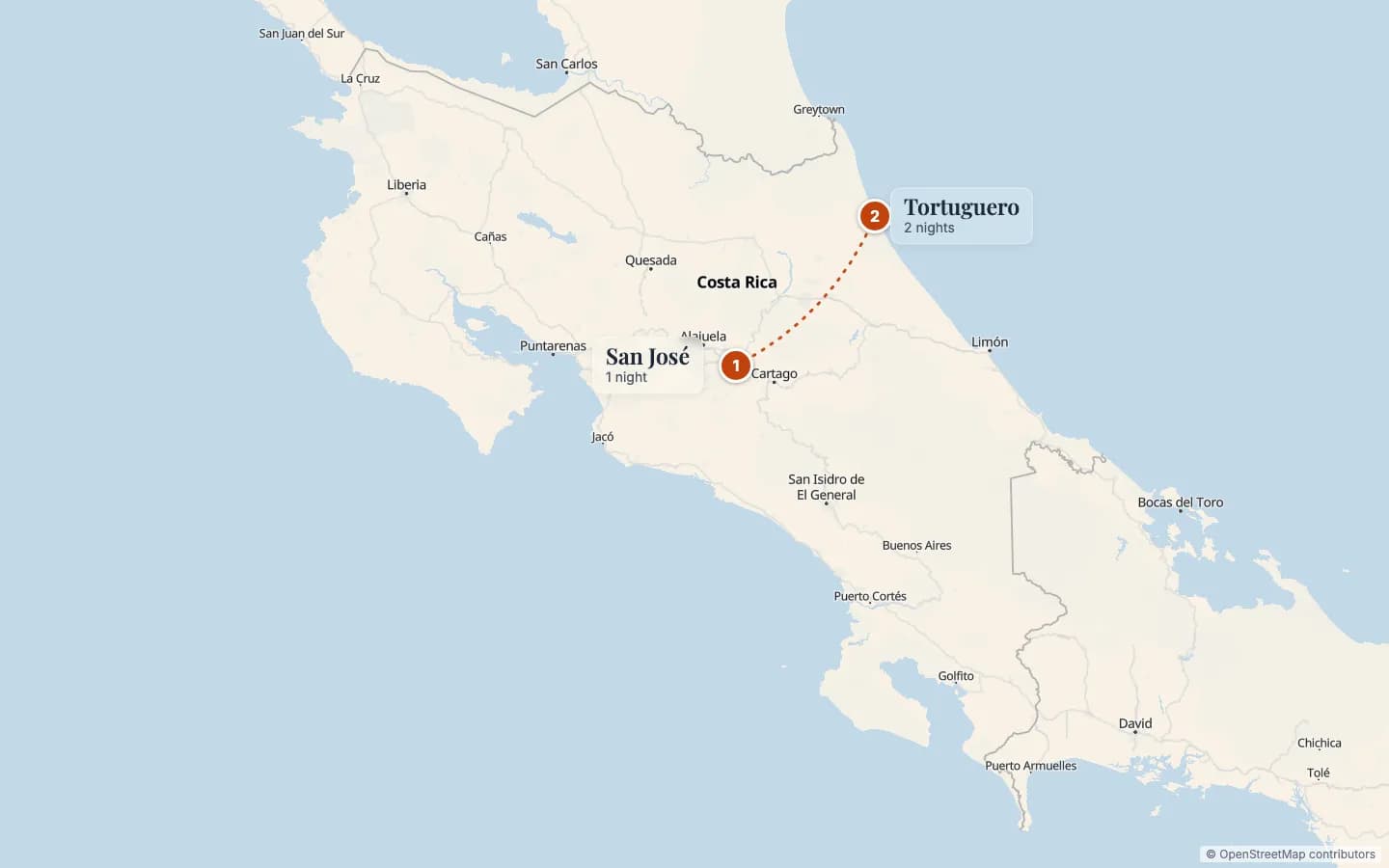
Tortuguero sits on the Caribbean coast of Costa Rica, on a thin strip of land between the sea and a maze of rivers and canals. No road reaches it. You arrive by boat or by small plane, and once you are there the boat is how you get around.
We spent two nights there at the end of October. We flew in from San José on a small plane, stayed at Pachira Lodge, looked round three more lodges, went out on the canals at six in the morning, walked up Tortuguero Hill, watched a turtle lay her eggs on the beach at night, and came back by boat and bus. Here is what we would tell a friend before they go.
Where is Tortuguero, and why go?
Tortuguero is in the north-east of Costa Rica, on the Caribbean side, towards the border with Nicaragua. The small village has a beach on one side and a wide lagoon on the other, and most of the lodges sit on the riverbanks facing it. The village sits beside Tortuguero National Park, which runs south down the coast.
People come for two things. The first is the canals: quiet channels of brown water under palms and tall forest, where a guide in a small boat looks for monkeys, sloths, caimans, iguanas and herons. The second is the turtles. Tortuguero's beach is one of the most important nesting beaches for green turtles in the world, and in season you can watch them come ashore at night with a licensed guide.
It feels very different from the rest of the country. There are no roads in or out, so the village runs on boat times and the weather.
How to get to Tortuguero from San José
There are two ways in, and we used both.
By small plane
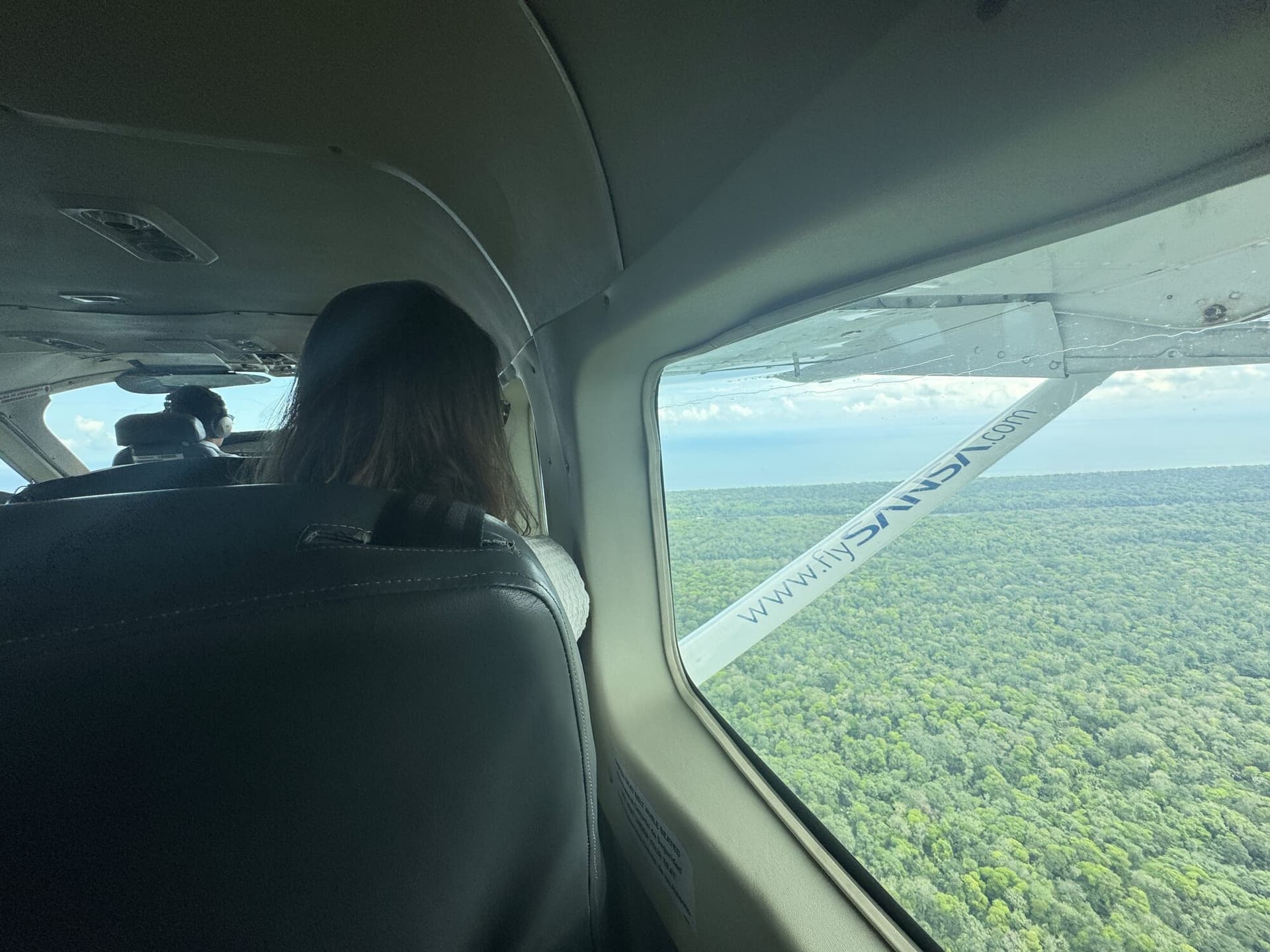
We flew. The flight leaves from the domestic terminal at San José's international airport, and the plane is a small single-propeller aircraft with a dozen or so seats. You sit a few feet behind the pilots and can watch them work.

We were in the air for about half an hour. The city gives way to farmland, then to cloud, and then to unbroken green forest with rivers cutting through it. The lodge boat was waiting at the airstrip, and we were at Pachira Lodge in time for lunch. It is a really easy and very convenient way to travel: a late-morning flight instead of a dawn start, and you are still at the lodge for lunch.
Two things to know before you choose the plane:
Your suitcase can come with you. On the flights we book, the allowance is 50 lb (about 23 kg) per person, so a normal 20 kg case travels without any problem. A soft bag is easier to load into a small plane than a big hard case.
Small planes depend on the weather. A flight can leave late, so we never put it on the same day as your flight home to the UK.
By boat and road
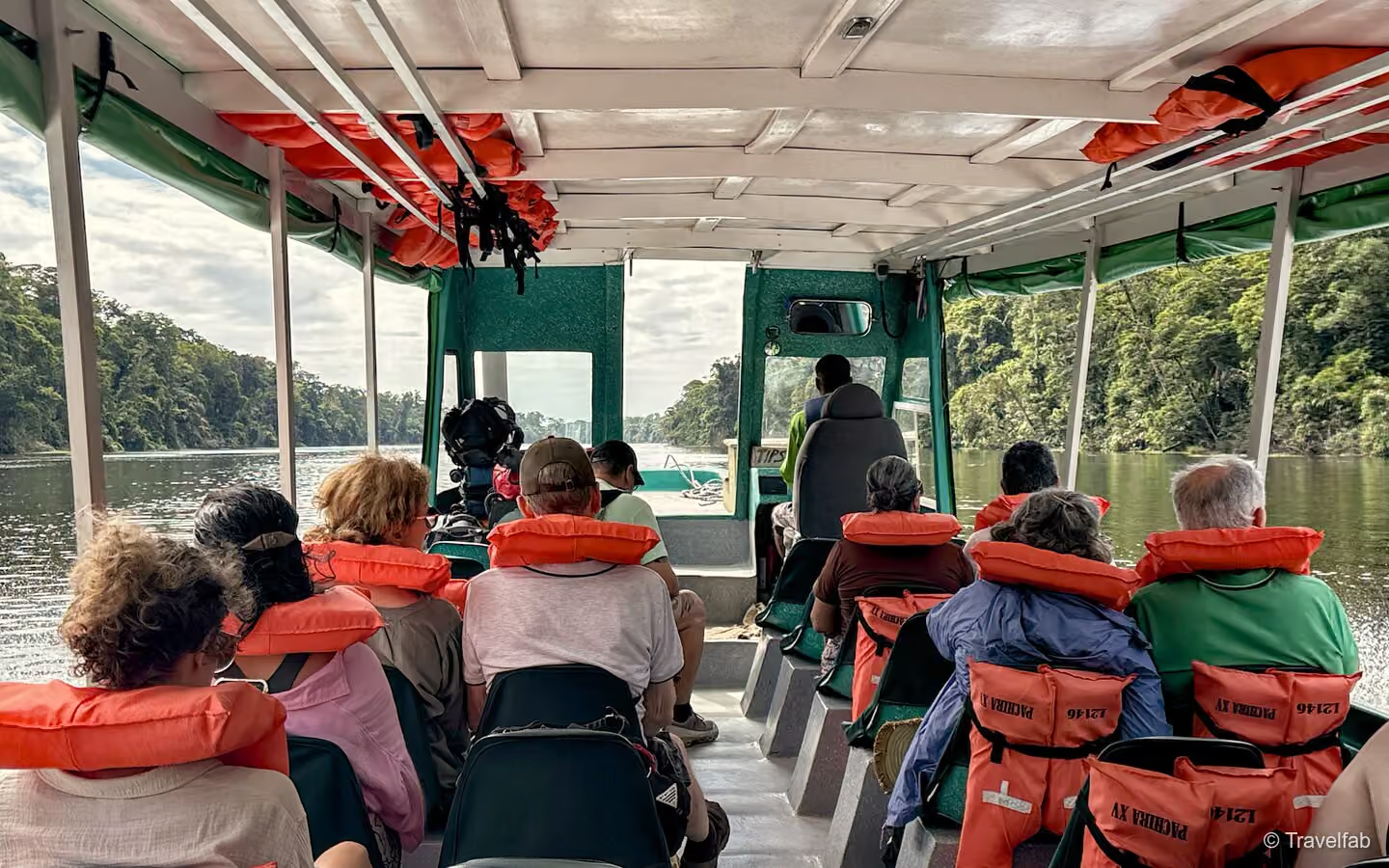
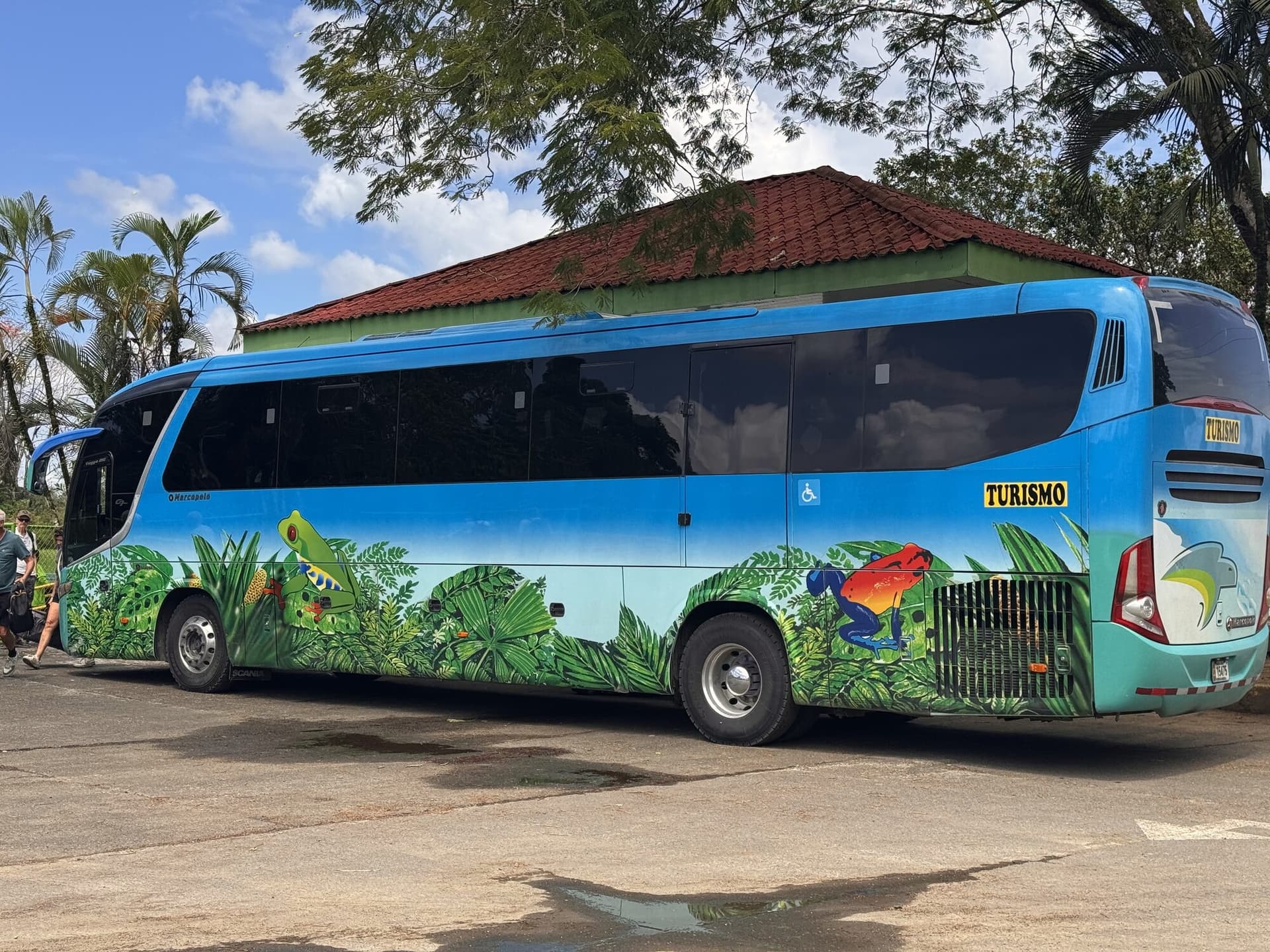
We came back the other way. The lodge boat collected us after breakfast, and we spent about an hour and a half on the river, watching the forest slide past, before we reached the landing where the buses wait. From there a bus took us back to San José.
It takes the best part of a day, but it is steady and you see more of the country: the river first, then the banana plantations and small towns of the Caribbean lowlands. There is also more room for luggage.
Which one should you choose?
We liked doing one of each. Flying in gives you an easy morning in San José instead of a very early pick-up. Leaving by boat gives you one more slow look at the canals, and you are never racing a plane. If you are happiest with a fixed timetable, do both legs by boat and road.
Where to stay in Tortuguero
Almost everyone stays in a riverside lodge rather than in the village. The lodges sell their stays as a package: boat transfers, all meals and some guided tours together, so once you arrive there is very little to organise. We stayed at one and visited three others, and we would happily send clients to all four.
Pachira Lodge
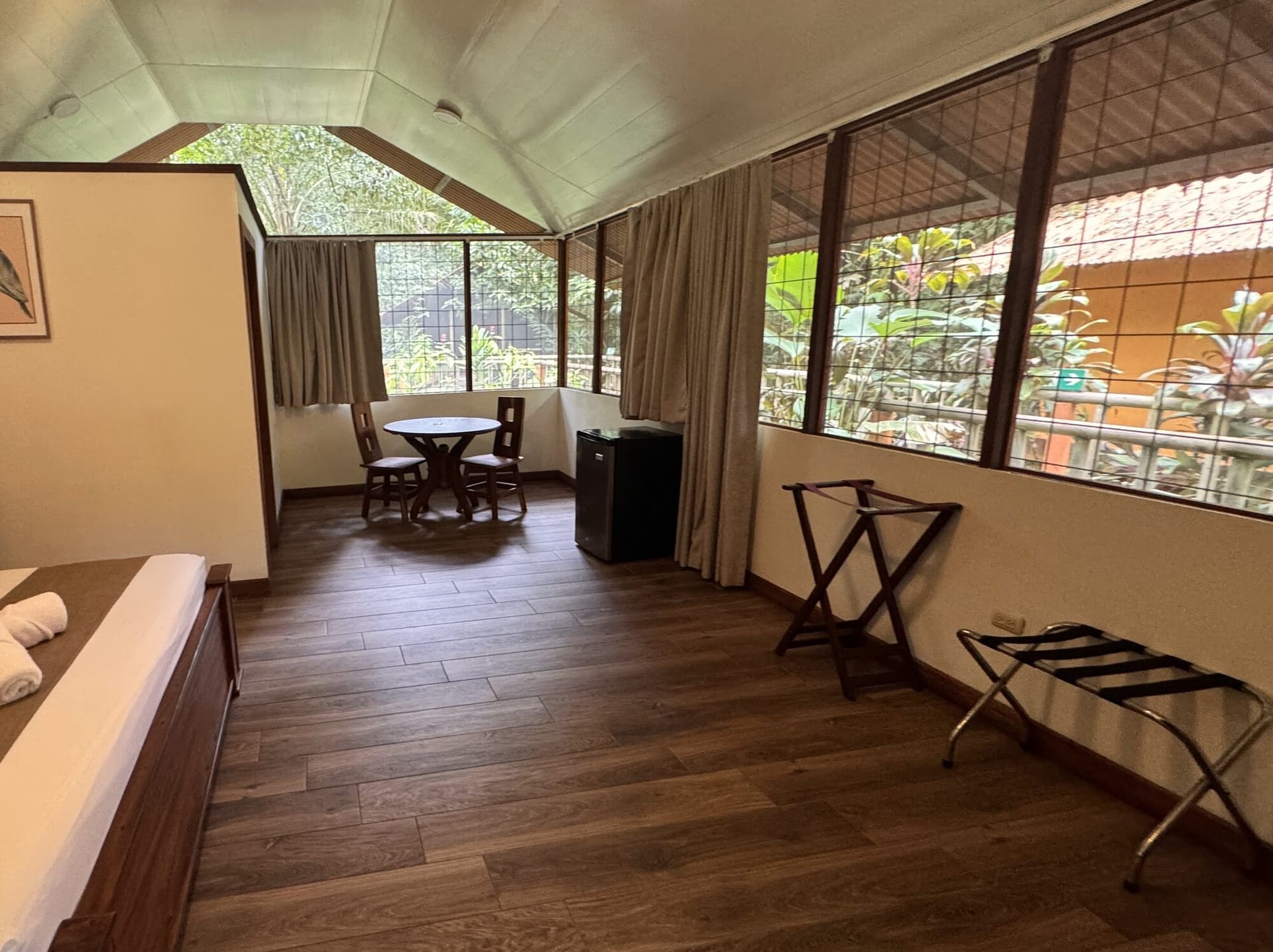
This is where we stayed, and it is the lodge we suggest first. It has a good location, close to the village by boat and right on the water, and it is surrounded by nature. The rooms we saw have big windows onto the garden and the trees.
Tortuga Lodge & Gardens
We had lunch here and walked round the grounds. The grounds run down to the river, and it is the most upmarket of the four we saw. Choose it if you want a little more comfort.
Aninga Lodge
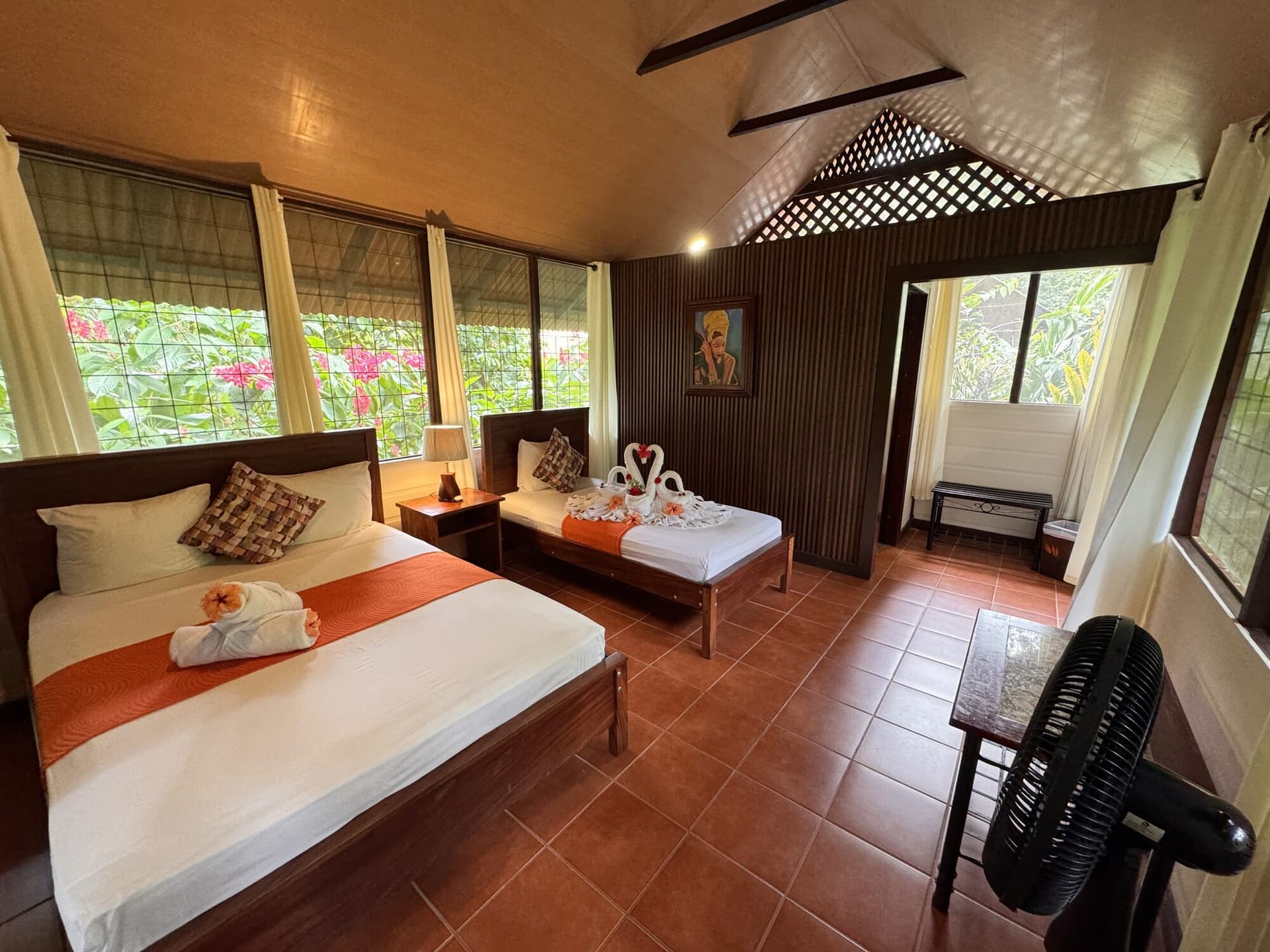
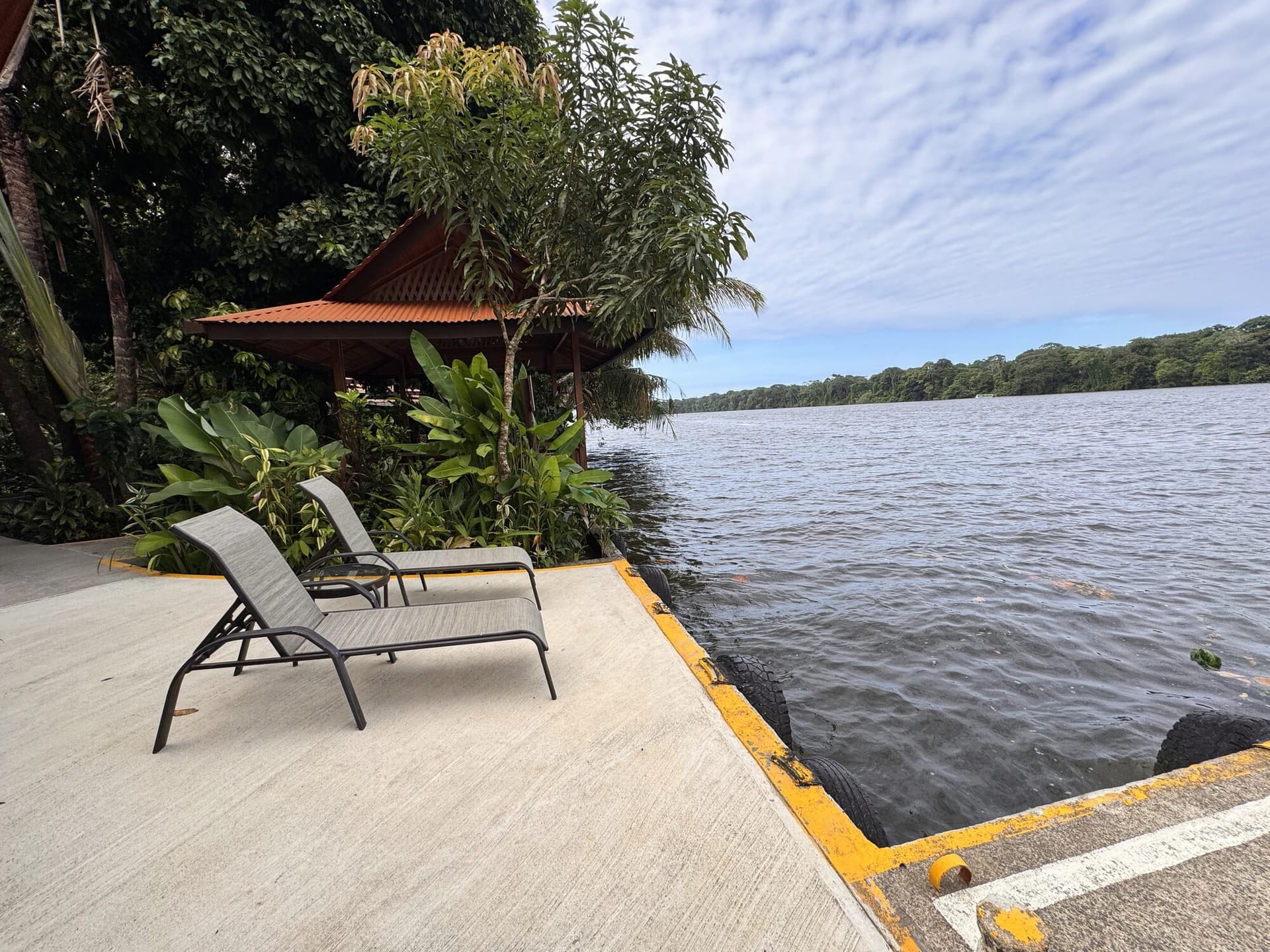
Aninga has bright rooms with big windows onto the garden, a pool, a small spa and a dock on the river with sun loungers. It is a good, comfortable choice for a couple who want somewhere to relax between tours.
Evergreen Lodge
Evergreen is set back among the trees beside the canal. Pick it if you want the forest right outside your door.
A word about the nights
Whichever lodge you choose, you are sleeping in the rainforest, not in a town, and it is not quiet. Guests we met who were staying at Evergreen told us they had not slept well, which is the other side of having the forest at your door: heavy rain drumming on the roof in the night, howler monkeys calling before dawn, and capuchin monkeys running across the roofs early in the morning. That is Tortuguero. If you are a light sleeper, pack earplugs, and remember the canal tour leaves at six anyway.
What you do in Tortuguero
Most stays follow the same easy rhythm: out early, a rest in the heat of the day, and out again later. This is what we did, and we would do all of it again.
Wildlife in the lodge garden
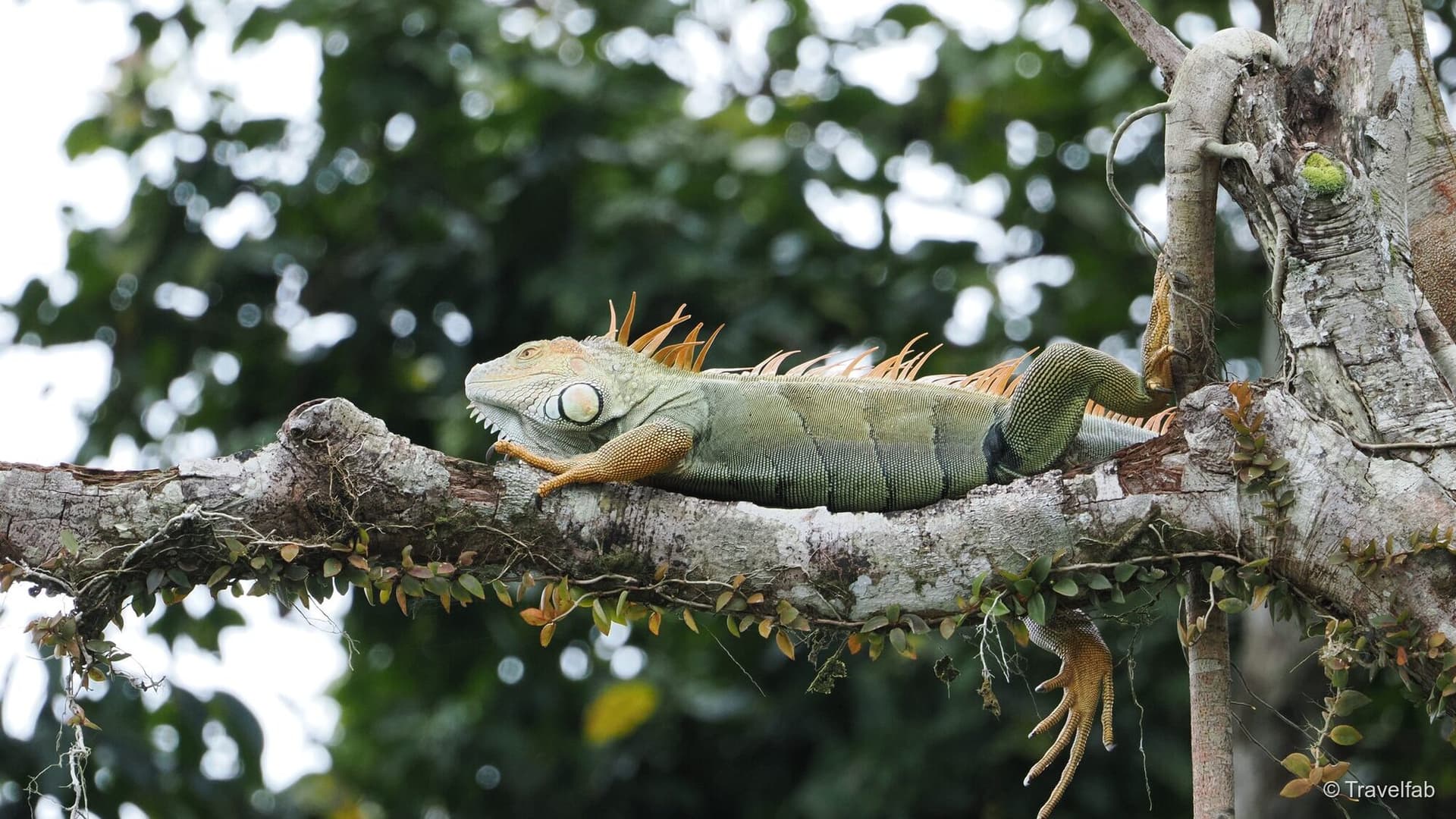
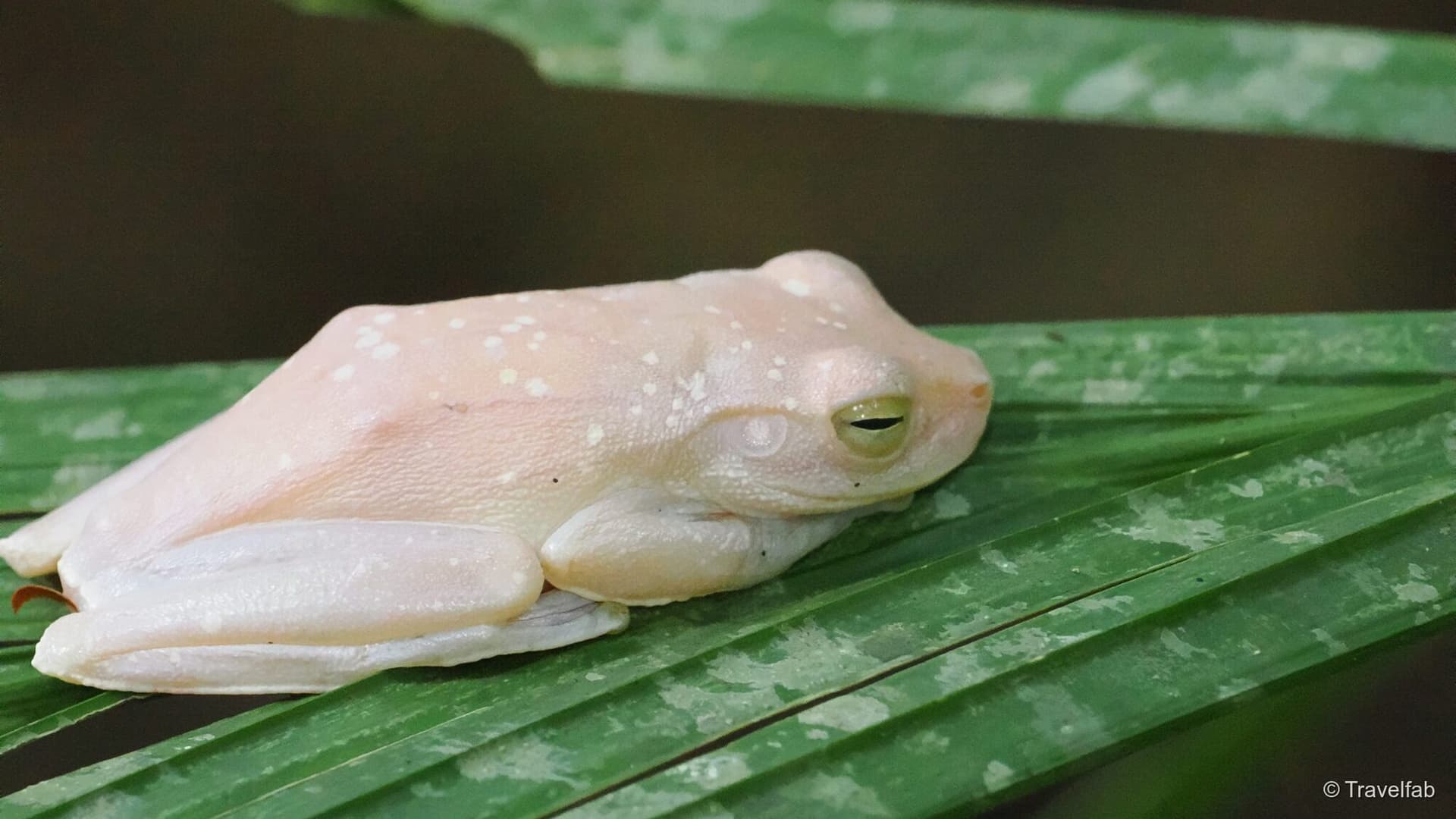
You do not have to go far to see animals here. In the lodge garden we saw an iguana, a sloth and a glass frog, a tiny green frog with skin so thin on its belly that you can see through it. We also found a pale tree frog fast asleep on a palm leaf.
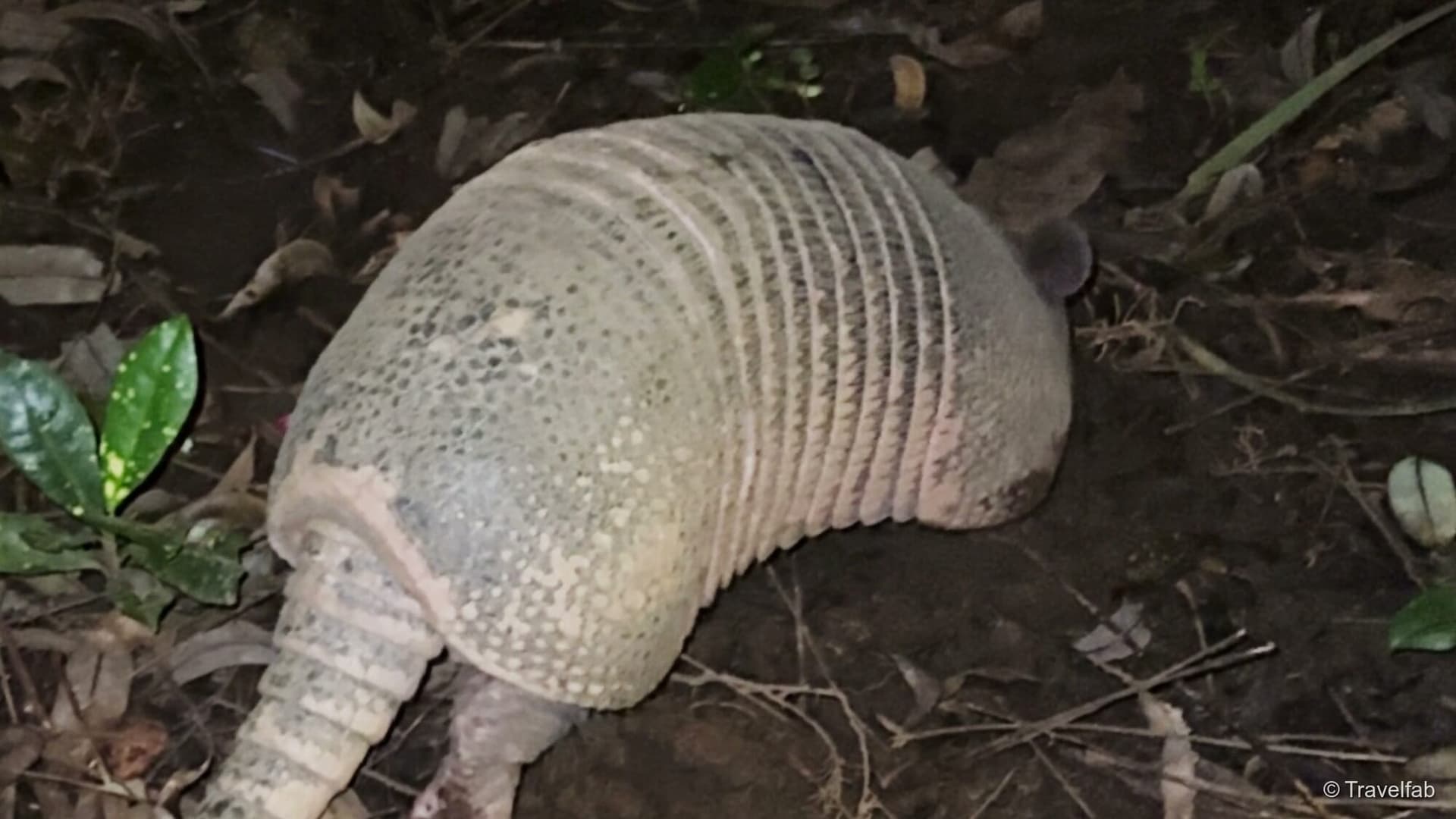
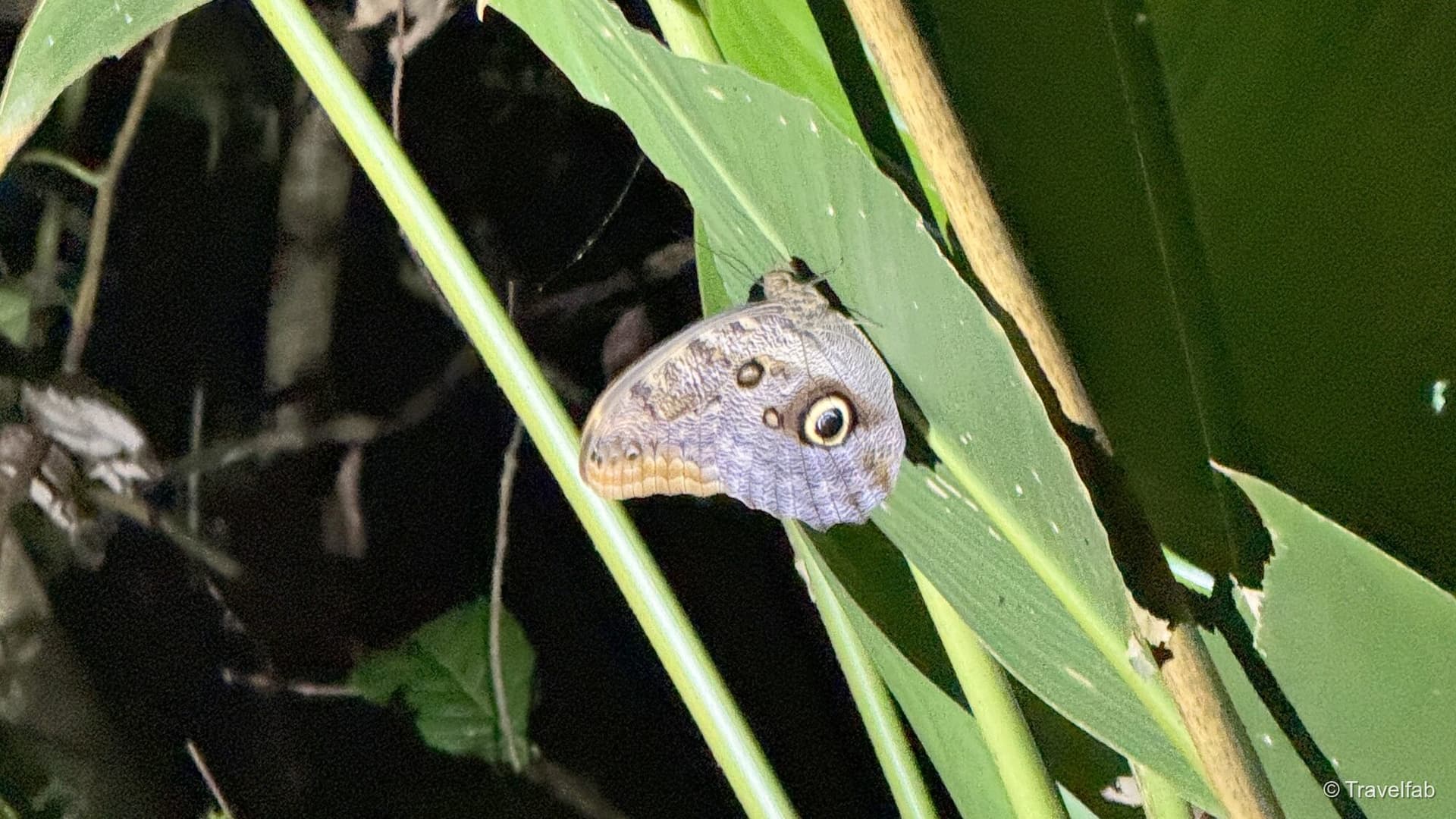
After dark the garden wakes up again. We found an owl butterfly resting on a leaf, and one evening an armadillo was digging beside the path.
On our first afternoon we also followed a boardwalk through the forest, past huge trees with buttress roots, while the guide looked for frogs, birds and sloths.
The canal tour at dawn
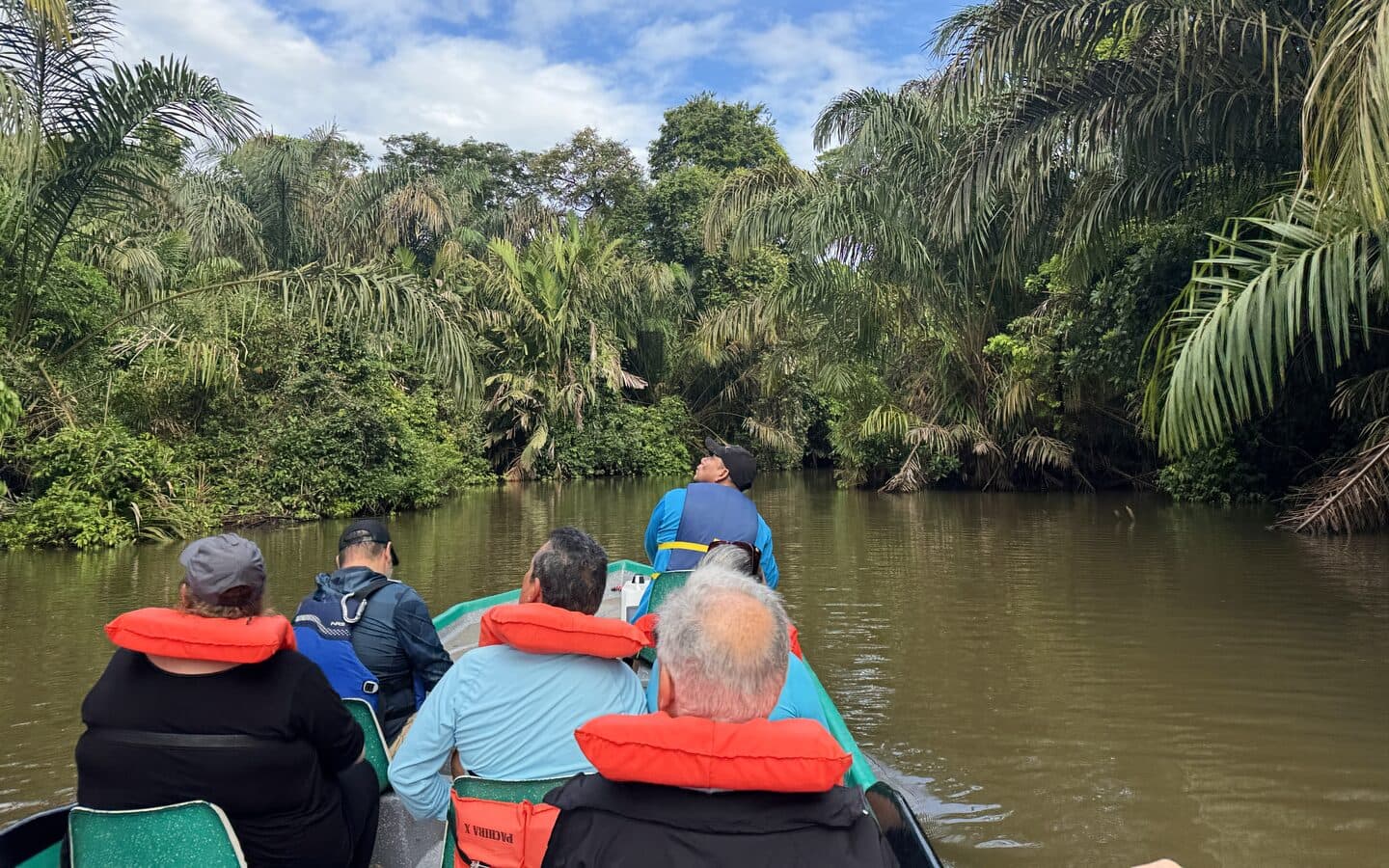
This is the highlight. We left at six in the morning, when the water is still and the animals are most active. The guide steers into the narrow channels of the national park and looks for monkeys, herons, kingfishers and caimans along the banks. You would miss most of them on your own.
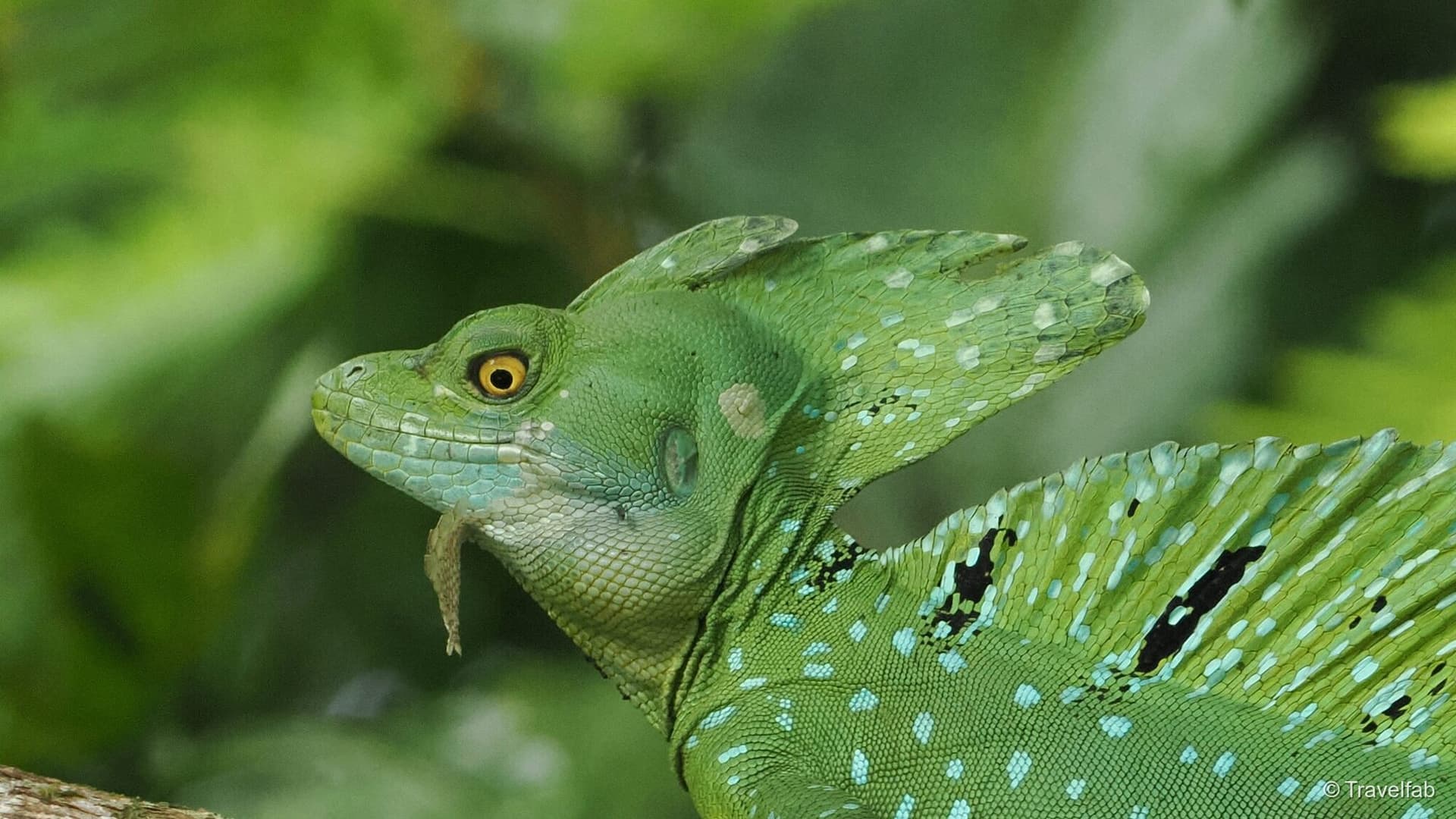
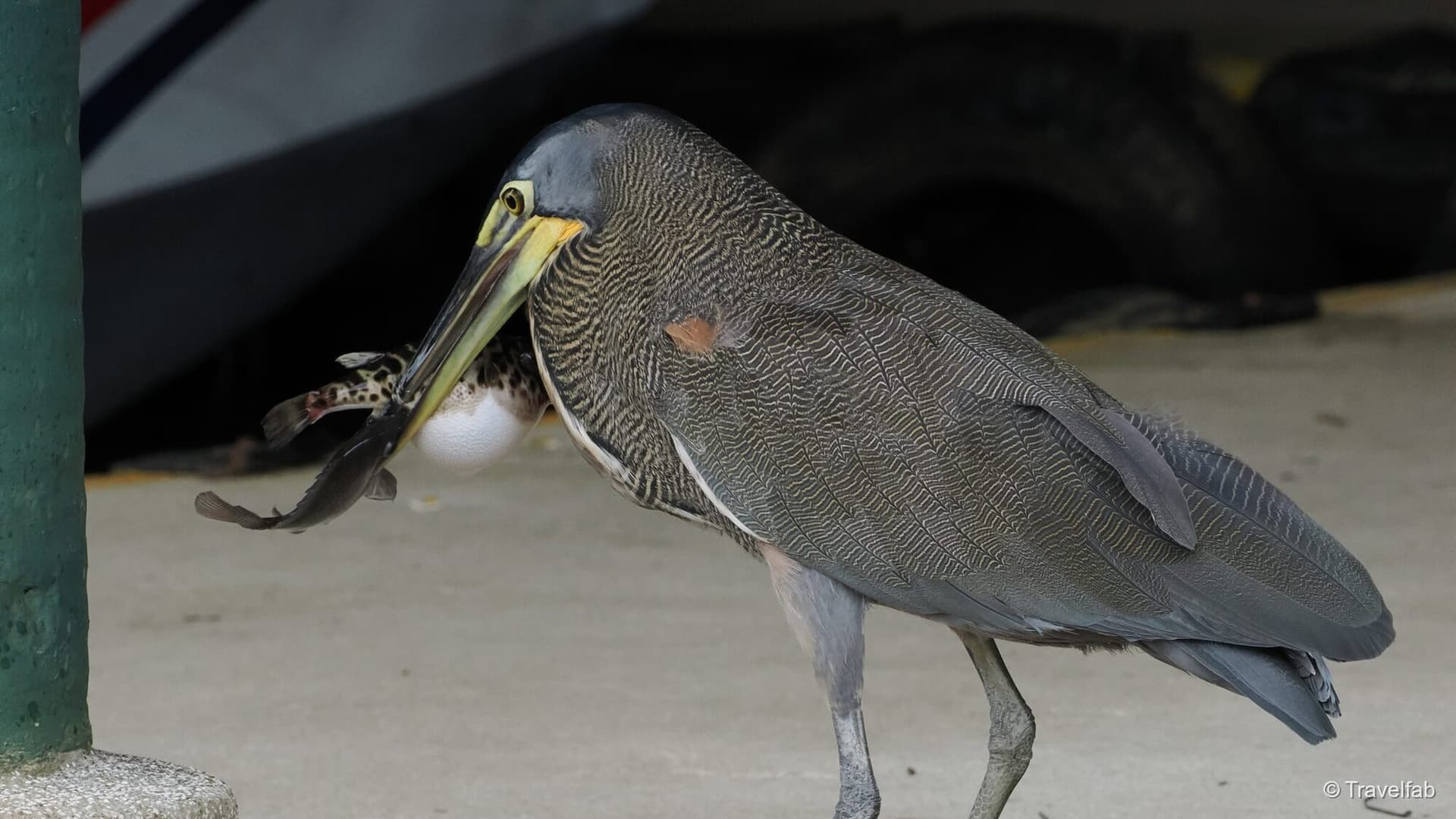
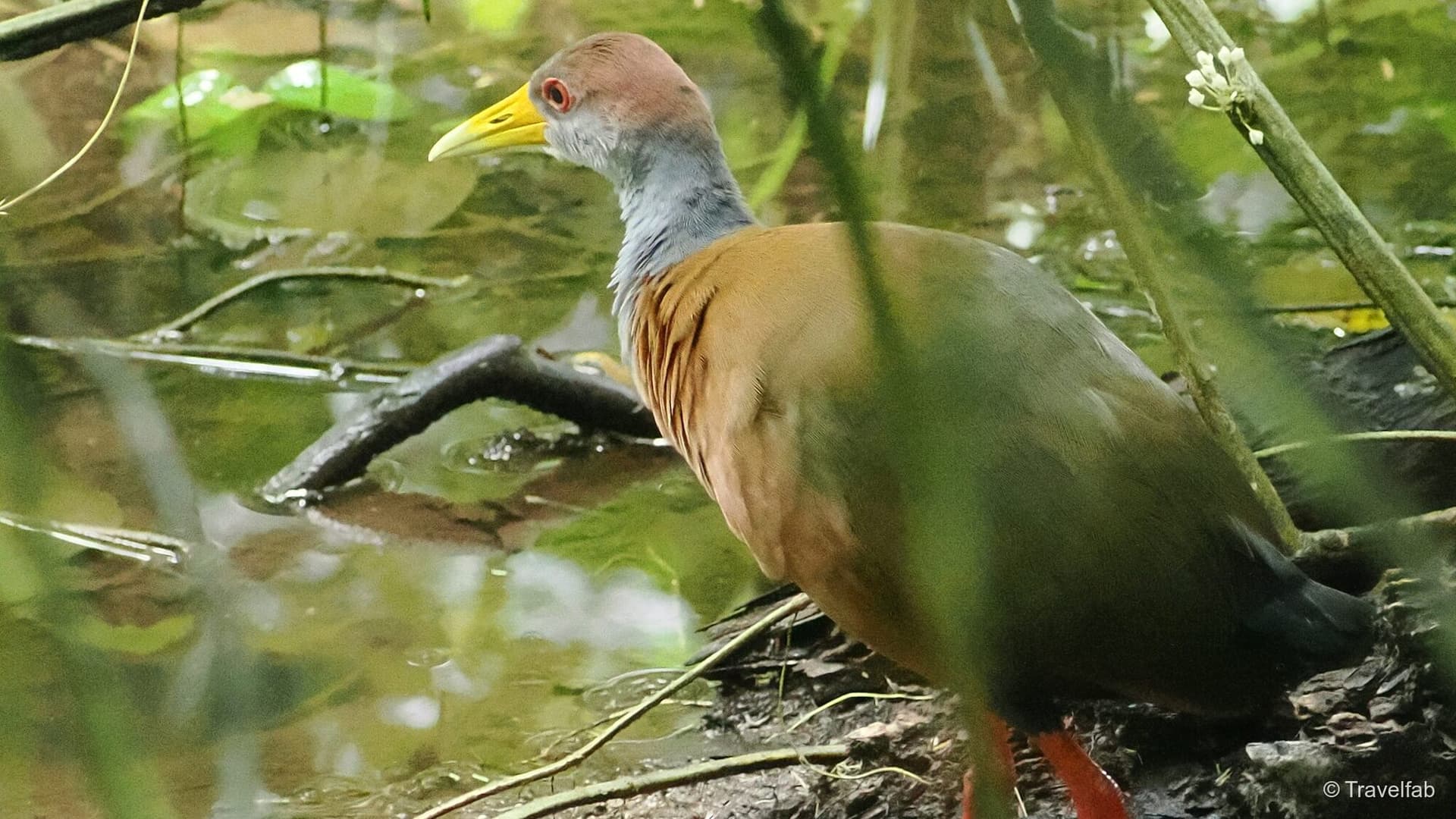
Between the boat trips and the walks we also saw a green basilisk, the lizard that can run across the water for a few metres, a tiger heron eating a fish it had just caught, and a grey-cowled wood rail picking its way along a muddy bank.
The walk up Tortuguero Hill
Tortuguero Hill, Cerro Tortuguero, is a short boat ride north of the village. At 119 metres it is the one real hill on this flat stretch of coast. The path starts flat through the forest, then climbs steeply up steps to a lookout. From the top you see the whole of Tortuguero at once: the village, the river running beside the sea, and forest as far as you can see.
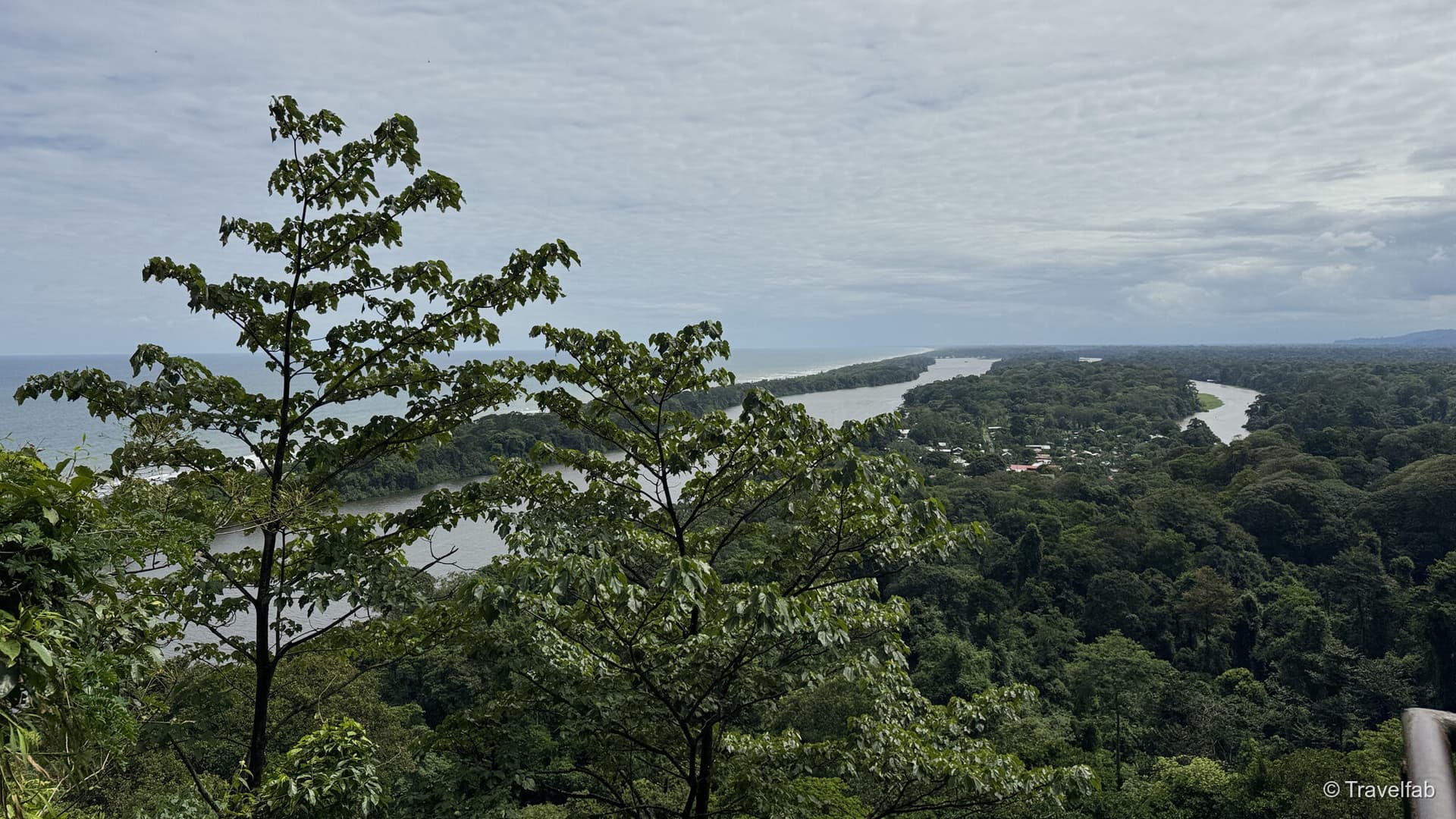
The walk was not part of our lodge package, so it cost a little extra. We thought it was well worth it. Nothing else shows you so clearly how Tortuguero fits together.
A guided walk through the village
A short guided walk takes you through the village and out to the beach. It is small, easy-going and only a few minutes by boat from most lodges.
The turtle tour at night
This is the one most people come for, and it is never guaranteed. On our first night we went down to the beach with a licensed guide, in the dark. We were lucky. A turtle had come up the sand, and we stood quietly and watched her lay her eggs, then sweep the sand back over the nest with her flippers until it was hidden. It was a very special moment, and we were there at the very end of the season, when sightings are fewer.
Turtle season in Tortuguero
Green turtles nest on Tortuguero's beach from about July to October, with the peak in August and September. We were there at the end of October, the tail of the season.
The rules on the beach are strict, and they are there for the turtles. From March to the end of October the beach is closed from 6pm to 6am unless you are with an official guide. No photos, no phones and no torches are allowed, you wear dark clothes, and the guides use a dim red light. Nobody touches a turtle. That is why we have no photo to show you. It also makes the night better, because nobody is looking at a screen.
If turtles are the main reason for your holiday, travel between July and early October. For the whole year of wildlife across the country, see our Costa Rica wildlife calendar.
The best time to visit Tortuguero
Tortuguero is rainforest, so it can rain at any time of year. The Caribbean coast has its own pattern, though: September and October, and February and March, are usually the driest months there, which is close to the opposite of the Pacific side. Our guide to the best time to visit Costa Rica goes through it month by month.
Pack a light rain jacket, insect repellent, light long sleeves for the evenings, earplugs, and binoculars if you have them. Leave the drone at home: drones are not allowed in the national park, and our Costa Rica drone laws guide explains why.
How Tortuguero fits into a Costa Rica holiday
Two nights is what we suggest, and it is the right amount for most people. It gives you one full day for the canals, the hill and the village, with the turtles at night in season.
Tortuguero works best at the start of a holiday, straight after a night in San José. From there you can cross the country to the Arenal volcano and the Pacific coast. Our Costa Rica Coast to Coast holiday begins exactly like that, and Tortuguero is also part of our Costa Rica Nature Lovers and Turtles, Whales and Dolphins holidays. Every one of them is tailor-made, so we can choose the lodge and the way in that suit you.
Frequently Asked Questions
There is no road to Tortuguero. You either take a small plane from San José, about half an hour in the air, or travel by road and then boat, which takes the best part of a day. We did one of each: we flew in and came back by boat and road.
We suggest two nights. It gives you one full day for the early canal tour, the village and a forest walk, plus a night turtle tour in season.
Green turtles nest from about July to October, with the peak in August and September. Turtle tours run at night with an official guide, and photos and phones are not allowed on the beach.
Yes, if you love wildlife and quiet places. The canals and forest are unlike anywhere else in Costa Rica, and the lodge packages make it easy: transfers, meals and tours are all arranged for you.
No. Drones are banned in Costa Rica's national parks, the park wraps around the village, and the village sits right next to an airstrip. The beach is also a turtle nesting beach. Our Costa Rica drone laws guide has the full rules.
Plan Your Tortuguero Holiday
Tell us when you would like to travel and we will build Tortuguero into a tailor-made Costa Rica holiday, with flights from the UK and ATOL protection.
MORE FROM TRAVELFAB
Holidays you might like
DESTINATIONS
Explore these places
KEEP READING
More stories
Costa Rica Wildlife Calendar: When to See What, Month by Month
A month-by-month Costa Rica wildlife calendar, when to see humpback whales, nesting sea turtles, quetzals and more, and where.
The Best Places to Visit in Costa Rica: A UK Traveller's Guide
The best places to visit in Costa Rica, volcanoes, cloud forest, wildlife parks and Pacific beaches, plus how to combine them.
Best Time to Visit Costa Rica: Weather, Wildlife & Where to Go
A Costa Rica specialist's month-by-month guide, weather, wildlife seasons and the surprising best time to go. Plan your trip with Travelfab.